
Summary
- Synthesized Insights Over Web Links: 37% of consumers say they start searches with AI tools instead of traditional search engines, with users citing AI as faster, clearer, and less cluttered.
- Hidden Tracking Elements: While many alternative platforms advertise standard user privacy, critical localized details, persistent session trackers, and telemetry loops frequently remain active unless opt-out parameters are set manually.
- Crawler Mapping: The most sustainable monetization strategies for alternative index platforms are explicitly aligned with independent indexes (such as BraveBot or ChatGPT-User) to maintain operational visibility outside legacy tech systems.
- Adaptive Contextual Threads: Advanced generative platforms use real-time conversational memory, ensuring you aren’t forced to retype basic keywords or lose track of layered, compound queries.
- Carbon Neutral Footprints: Top-tier green engines ensure verifiable offsetting practices, utilizing ad-revenue models to directly fund reforestation or clean energy programs to match processing footprints.
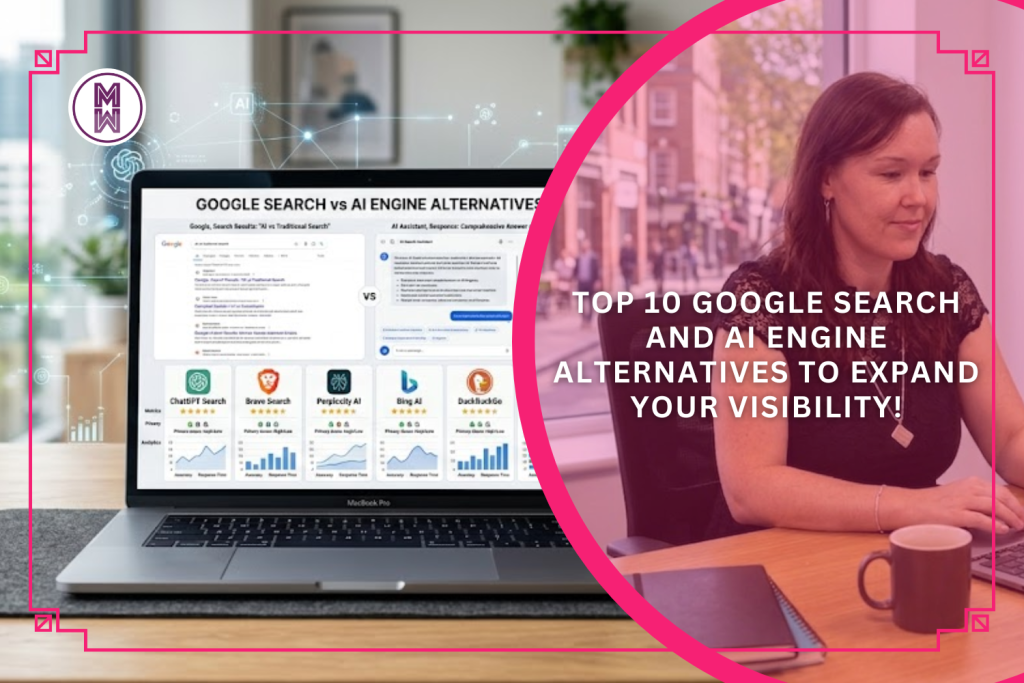
Comparison Matrix: Google Ecosystem vs. Next-Generation Alternatives
| Architectural Feature | Google Baseline | Independent Web Indexers | Generative AI Search Engines |
| Core Search Tech | Dual System: Core Web Index + Gemini AI Layer | Autonomous Web Crawlers & Custom Ranking Systems | Retrieval-Augmented Generation (RAG) + LLM Interface |
| How Content is Found | Googlebot crawls, catalogs, and ranks global URLs. | Proprietary bots (BraveBot, Bingbot) map the web. | Live APIs pull text snippets from partner indexes on the fly. |
| Primary User Output | Mixed SERP: Ads, links, maps, and AI Overviews. | Structured web directories, organic link lists, and deep URLs. | Single synthesized text response featuring numbered citations. |
| Data Privacy Stance | Heavy data profiling used for targeted ad networks. | Strict privacy: erases footprints and blocks tracking codes. | Conversational thread memory relies on manual opt-out. |
| Target Workflows | Daily web navigation, local mapping, and shopping. | Objective research and finding raw un-biased link lists. | Deep multi-step market research, coding, and text synthesis. |
| Engines on Our List | Google, Google Gemini | Brave Search, Microsoft Bing, Startpage | Perplexity AI, ChatGPT Search, Copilot, You.com, Consensus |
How I Selected and Ranked the Best Alternative Search & Answer Engines
I considered the following factors:
- The precision, source consistency, and speed of each platform’s response or web-indexing architecture.
- The explicit level of data privacy or verifiable philanthropic value provided compared to standard data tracking engines.
- The reliability and maturity of the underlying technology stack over long-term usage.
- The platform’s track record for handling localized information without returning empty placeholders or dead URLs.
- The platform has transparent, high-quality user reviews from verified web professionals, developers, and daily users across major product directories.
- The platform enables relatively clear and transparent indexation or crawl techniques for content, websites and channels to be indexed, ranked and cited.
Note: I’ve ranked these by a combined score of their conversational features, index autonomy, data transparency, and public ratings, so the platforms where users see the most useful, untracked answers sit highest on my list. The information provided in this list may be subject to change but was correct at the time of publishing.
1. Brave Search – 4.7 | 5 ★ with 3,500,000 Google Play Store Reviews
Brave stands out as a genuinely independent alternative engine. It crawls the web via its own bot rather than relying on Google or Bing, offering a built-in AI Summarizer for quick answers.
- Website: brave.com
- Highlight Features: 100% independent indexing, an integrated “Goggles” feature that allows users to apply custom ranking filters, and strict user-privacy protection.
- Best Search Types: Privacy-first browsing, uncensored news research, and direct regional queries.
- How It Indexes Content: Brave uses its own autonomous crawler, BraveBot, to discover, parse, and index web pages completely independently of legacy tech networks.
- How Brands Get Found: You must ensure your server doesn’t treat BraveBot as a suspicious scrap-bot. Because Brave builds its index from scratch, prioritize generating high-quality external backlinks from active forums and local directories to ensure BraveBot discovers your URLs naturally.
2. DuckDuckGo – 4.7 | 5 ★ with 2,400,000 Google Chrome Web Store Reviews
The most well-known name in data privacy has adapted to modern search with DuckAssist. This tool extracts specific, highly accurate natural language answers directly from high-trust public knowledge bases.
- Website: duckduckgo.com
- Highlight Features: Tracker-blocking mobile extensions, custom search shortcuts (Bangs), and localized maps built using Apple Maps frameworks.
- Best Search Types: Everyday quick lookups, direct URL routing, and looking up sensitive or private personal topics.
- How It Indexes Content: DuckDuckGo operates as a hybrid engine. It does not maintain a full web index from its own crawler; instead, it compiles its results using a combination of its own DuckDuckBot crawler (for site validation) and structured search APIs from partner networks like Bing.
- How Brands Get Found: Unlike Google, DuckDuckGo does not have a webmaster console, meaning users cannot submit websites or sitemaps directly to DuckDuckGo. To get your brand found here, you must submit and verify your site through Bing Webmaster Tools; once Bing indexes your pages, they automatically filter into DuckDuckGo’s search results. Additionally, ensure your robots.txt file isn’t blocking DuckDuckBot, and establish an accurate, non-promotional brand presence in foundational databases like Wikipedia and Wikidata, which feed DuckAssist’s instant answer boxes.
3. Perplexity AI – 4.6 | 5 ★ with 2,000,000 Google Play, & App Store Reviews
Perplexity is the gold standard for conversational, citation-first research. It uses a Retrieval-Augmented Generation (RAG) architecture to map out user intent and provide synthesized, multi-paragraph answers tied directly to numbered citations.
- Website: perplexity.ai
- Highlight Features: Interactive “Pro” multi-step search threads, deep-dive source listings, and custom collections.
- Best Search Types: Complex market research, technical data synthesis, and deep topic exploration.
- How It Indexes Content: Perplexity does not maintain a traditional web index. Instead, it is an advanced generative search layer that uses PerplexityBot to scan the web in real-time, executing live queries against external indexing infrastructures (including Bing) and processing the results via its internal LLM framework.
- How Brands Get Found: You must add User-agent: PerplexityBot Allow: / to your robots.txt file. Structure your content with extreme concept density using Q&A heading formats, and state your direct answer immediately within the first 50–100 words of a sub-topic to make it simple for the engine to extract as a numbered citation.
4. Microsoft Bing – 4.4 | 5 ★ (1,600,000 Google Play Store Reviews)
Bing is the most direct, familiar corporate alternative to Google. It is an all-in-one mainstream engine that features comprehensive web directories, localized mapping, image/video carousels, and shopping modules alongside its native conversational AI capabilities.
- Website: bing.com
- Highlight Features: Daily high-resolution homepage backgrounds, deeply integrated video thumbnail previews, and a built-in “Microsoft Rewards” program.
- Best Search Types: Visual image and video discovery, localized business lookups, and shoppers looking to compare retail prices across web links.
- How It Indexes Content: Bing operates a massive, fully independent web infrastructure. It deploys its proprietary crawler, Bingbot, to constantly discover, scan, and catalog billions of global URLs into its own web index.
- How Brands Get Found: Ensure your site is fully authenticated within Bing Webmaster Tools and keep Bingbot allowed globally. [c]To stand out, you must optimize your local business presence using Bing Places and leverage precise, descriptive image alt tags so your media populates Bing’s visual search grids.
5. ChatGPT Search – 4.7 | 5 ★ with 500,000 Apple App Store & Google Play Reviews
OpenAI’s native search function embeds live web data straight into your ongoing conversation threads. It eliminates the barrier between creative generation and real-time facts.
- Website: chatgpt.com
- Highlight Features: Seamless conversational memory, rich UI interactive cards (weather, maps, stocks), and direct inline attribution links.
- Best Search Types: Creative brainstorming, shopping discovery, and layered filtering tasks.
- How Brands Get Found: You must check that your site isn’t inadvertently blocking the ChatGPT-User crawler in your robots.txt file. Write clear, natural content that directly addresses conversational user pain points in the initial 200 words of your landing pages.
6. Ecosia (AI-Enhanced) – 4.2 | 5 ★ with 195,000 Google Chrome Store & Trustpilot Reviews

Ecosia delivers a highly philanthropic option that channels search ad revenues toward global tree planting initiatives. It has evolved its traditional layout by adding direct AI chat summaries directly alongside its main organic results.
- Website: ecosia.org
- Highlight Features: Traceable financial transparency reports, completely carbon-negative infrastructure, and an “Eco-Label” highlighting sustainable brands.
- Best Search Types: Standard daily web searches, lifestyle inquiries, and searching for green/ethical consumer products.
- How It Indexes Content: Ecosia is a search syndication platform that does not run an independent web crawler or index. All underlying organic search data and localized mapping are entirely generated and processed by the Bing search index.
- How Brands Get Found: Because Ecosia operates as a partner syndicating results from the Bing index, your visibility here relies on a well-optimized presence within Bing Webmaster Tools and your local Bing Places mapping.
7. Microsoft Copilot – 4.4 | 5 ★ 120,000 with Google Play Store Reviews
Powered by Microsoft’s massive Bing index and OpenAI’s foundational enterprise models, Copilot remains a massive search option integrated directly into corporate and workspace environments.
- Website: copilot.microsoft.com
- Highlight Features: Multi-modal inputs (search using complex combinations of images, voice, and text), deep integration with office apps, and toggles for precision or creativity.
- Best Search Types: In-depth B2B product evaluations, enterprise data analysis, and multi-variable business comparisons.
- How It Indexes Content: Copilot does not have a separate index or a specialized Copilot crawler. It is completely dependent on the Microsoft Bing index. Bingbot handles all web discovery and indexing; if your site experiences an issue or penalty within the Bing index, it will instantly drop out of Copilot’s generation pipeline as well.
- How Brands Get Found: Copilot extracts its answers directly from the Bing index, so brands must make their content highly scannable for Bingbot by deploying detailed JSON-LD structured schema code (Product, Organization, LocalBusiness, and FAQ markups). For Copilot’s enterprise-heavy research queries, this machine-readable data allows the AI to pull your technical specs with perfect precision straight from Bing’s database.
8. You.com – 4.5 | 5 ★ with 15,000 Product Hunt & G2 Reviews
You.com acts as an AI search workspace built around customizable task-based “Agents”. It organizes answers visually so users can complete real-time actions without bouncing between open browser tabs.
- Website: you.com
- Highlight Features: Specialized “Research”, “Genius,” and “Coding” modes that apply different algorithms based on what you need.
- Best Search Types: Competitive tool comparisons, content draft outlines, and layered math or programming tasks.
- How It Indexes Content: You.com uses its proprietary crawler, YouBot, to build a customized semantic index of the web, which it heavily augments with real-time API calls to traditional third-party indexes to handle broader, long-tail search queries.
- How Brands Get Found: You must check your robots.txt file to explicitly include User-agent: YouBot Allow: /. To feed You.com’s visual multi-tab “Agents,” avoid hiding critical data inside expandable JavaScript dropdowns or click-to-reveal tabs. Focus heavily on structured comparison content; create “Alternative to X” markdown tables and transparent pricing blocks on your service pages, as You.com’s research algorithms actively scrape data tables to map out side-by-side product matrices.
9. Startpage – 4.5 | 5 ★ (14,300 Combined Play Store & App Store Reviews)
Startpage offers a brilliant option for users who love the depth of Google’s search algorithms but completely reject its data-tracking business model. It acts as a strict privacy barrier between your computer and Google’s data harvesting loops.
- Website: startpage.com
- Highlight Features: “Anonymous View” proxy feature (allowing you to click and browse search results inside a secure private proxy window so the destination site cannot see your IP address or cookies) and completely un-personalized search outputs.
- Best Search Types: Researching highly confidential topics, medical queries, and looking for completely unbiased, non-targeted search results.
- How It Indexes Content: Startpage does not run its own web crawler. Instead, it submits your search queries to Google anonymously on your behalf. It strips away your IP address, tracking elements, and browser fingerprints before retrieving Google’s organic results and serving them back to you in total privacy.
- How Brands Get Found: Startpage pulls its results directly from the Google index, your visibility here is 100% dependent on traditional Google SEO practices. There is no unique Startpage optimization; if your brand ranks on Google through strong domain authority, high-quality backlinks, and fast page speeds, you will automatically appear in Startpage’s private search results.
10. Consensus – 4.6 | 5 ★ with 12,000 Trustpilot Reviews
Consensus is a highly specialized AI search tool that completely filters out mainstream blogs and commercial media sites. It queries exclusively across hundreds of millions of peer-reviewed scientific research papers.
- Website: consensus.app/search
- Highlight Features: “Consensus Meter” which analyzes the collective scientific sentiment on a health or scientific topic, and instant APA/MLA citation builders.
- Best Search Types: Evidence-based medical lookups, scientific queries, and validating data claims.
- How It Indexes Content: Consensus does not crawl the open web. Instead, it uses specialized semantic search pipelines to index massive structured academic publishing repositories, predominantly pulling from the Semantic Scholar database.
- How Brands Get Found: Traditional web SEO and blog optimization have zero impact here. For research, academic institutions, or medical data to surface in Consensus, the content must be published as peer-reviewed studies or clinical trials within indexed scientific journals. Maximizing semantic clarity in study abstracts and ensuring papers are properly registered in major scientific repositories is the only way to appear in the results.
Identify the Best Alternative Search Engines For You
As you can see in my list, search and answer engines are becoming a lot more specialised and niche-focused. I therefore recommend you first identify which of them would be most suitable for your purposes or target audiences, before you invest in getting indexed and cited. You might think, the more the better, but if your content is not picked up, then you’ve wasted a lot of time and energy.
Once you’ve identified the best matches, download the browser extensions or apps, set up an account, and test the platforms you have chosen yourself. Stick with the ones that give you the best results – more SEO tools now show from which search and answer engines your traffic comes, so make sure to monitor it, if you can. I can also assist and via the ClickDo blog you’ll find my updates on organic SEO, AEO and marketing case studies.
If you want me to add a search or answer engine recommendation here based on your experience, please get in touch with me!
Frequently Asked Questions (FAQs)
1. How do I know if an AI search engine aligns with data compliance standards?
Look for tools that explicitly state their alignment with regional and global frameworks (such as GDPR for UK/European operations or COPPA if used in educational spaces). Platforms like Brave Search and DuckDuckGo let you toggle global trackers off directly, ensuring completely anonymous data routing.
2. Can mobile AI answer engines completely replace traditional search workflows?
No. While adaptive generation models are highly effective at synthesizing facts, pulling code snippets, and answering complex multi-part questions, they cannot completely replace the broad discovery capabilities of standard web directories. For raw, unstructured document deep-dives, localized maps, or immediate navigation, combining an answer engine with a traditional index is best.
3. How can I prevent team members from using AI engines just to copy unverified content?
The best approach is to treat AI engines as assistants rather than final truth sources. Encourage team members or content creators to cross-verify the inline citation numbers provided by engines like Perplexity or ChatGPT. Many managers run internal content checks and mandate that primary web source validation must be completed during the revision phase. You can also utilise professional content writing services that will ensure the content is fact-checked and unique.
4. Are there any completely free AI search engines without hidden subscription blocks?
Yes. Brave Search and DuckDuckGo (including DuckAssist) are entirely free platforms funded by independent networks or non-profit private initiatives. They contain zero paywalled features, subscription prompts, or gated search performance metrics.