Digital Nomad Lifestyle

kameras-perfekt-fuer-die-naechste-digitale-nomadenreise
All posts, Digital Nomad Lifestyle

Kompakte Kameras perfekt für die nächste digitale Nomadenreise

Die Wahl der richtigen Kamera kann entscheidend für die Qualität der Erinnerungen sein, die Sie auf Ihren Reisen als digitaler Nomade, wie ich, festhalten. Kompakte Kameras sind aufgrund ihrer Benutzerfreundlichkeit und Portabilität besonders beliebt bei Reisenden wie mir. Stellen Sie sich vor, Sie sind am schönsten Ort der Welt, mit einer Kamera, die nicht nur leicht ist, sondern auch beeindruckende Bilder liefert. Diese Technologien haben die Art und Weise revolutioniert, wie wir Reiseerlebnisse dokumentieren, vor allem als Influencer und Blogger. Hier teile ich, warum kompakte Kameras die ideale Wahl für Ihre nächste Reise sind. Vorteile kompakter Kameras für reisende digitale Nomaden Kompakte Kameras bieten zahlreiche Vorteile, die sie zu einer hervorragenden Wahl für reisende Nomaden machen. Sie sind leicht und einfach zu transportieren, was besonders wichtig ist, wenn Sie mit leichtem Gepäck reisen möchten. Sie passen problemlos in eine Handtasche oder in die Tasche einer Jacke. Diese Portabilität ermöglicht es, dass Sie immer bereit sind, den perfekten Moment festzuhalten, seien es atemberaubende Sonnenuntergänge oder spontane Szenen von der Straßenecke. Ein weiterer Vorteil ist ihre Benutzerfreundlichkeit. Viele Modelle bieten automatische Funktionen, die es selbst Anfängern ermöglichen, schnell großartige Fotos zu schießen. Dies ist besonders wichtig, wenn Sie spontane Momente festhalten möchten, ohne viel Zeit mit komplizierten Einstellungen zu verbringen. Die Möglichkeit, einfach auf den Auslöser zu drücken und beeindruckende Ergebnisse zu erzielen, ist ein großer Pluspunkt. Zudem haben viele kompakte Kameras eine ausgezeichnete Bildqualität, die häufig mit der von DSLR-Kameras vergleichbar ist. Die beste kompakte Reisekamera ermöglicht es Ihnen, atemberaubende Bilder von Landschaften, Städten und besonderen Momenten zu machen, ohne auf schweres Equipment zurückgreifen zu müssen. Dies bedeutet, dass Sie den Fokus auf das Erleben der Reise legen können, anstatt sich über schwere Ausrüstung Gedanken zu machen. Auswahl der richtigen kompakten Kamera Bei der Wahl der idealen kompakten Kamera für Ihre Reise sind mehrere Faktoren zu beachten. Zunächst sollten Sie sich überlegen, welche Art von Fotos Sie am meisten machen möchten. Sind es Landschaftsaufnahmen, Porträts oder Schnappschüsse Ihrer Umgebung? Diese Überlegungen helfen Ihnen, ein Modell auszuwählen, das Ihren Reisegewohnheiten entspricht. Die Megapixelzahl ist ein wichtiger Aspekt. Je höher die Megapixel, desto besser die Bildqualität, insbesondere bei großen Ausdrucken oder beim Zuschneiden von Bildern. Achten Sie auch auf die Linse und die Blendenöffnung. Eine große Blende ermöglicht es, bei schwachem Licht bessere Bilder zu machen, was in Innenräumen oder bei Dämmerung von Vorteil ist. Eine Kamera mit einer Vielzahl an Blendenoptionen kann Ihnen dabei helfen, kreative Effekte zu erzielen, die Ihre Fotos hervorheben. Eine weitere Überlegung sollte die Akkulaufzeit sein. Nichts ist frustrierender, als in der Mitte einer Reise festzustellen, dass die Kamera nicht genügend Energie hat. Planen Sie, einen zusätzlichen Akku mitzubringen, um sicherzustellen, dass Sie bereit sind, die richtigen Aufnahmen zu machen. Informieren Sie sich auch darüber, ob die Kamera eine optionale Möglichkeit hat, die Akkulaufzeit zu verlängern, beispielsweise durch Energiesparmodi. Tipps zur optimalen Nutzung Ihrer kompakten Kamera auf Reisen Um das Beste aus Ihrer kompakten Kamera herauszuholen, ist es wichtig, einige grundlegende Techniken zu beherrschen. Lernen Sie die verschiedenen Funktionen Ihrer Kamera kennen und experimentieren Sie mit den manuellen Einstellungen, um kreative Effekte zu erzielen. Nehmen Sie sich Zeit, um die Bedienungsanleitung zu lesen, oder suchen Sie online nach Tutorials, die Ihnen helfen, die Möglichkeiten Ihrer Kamera vollständig auszuschöpfen. Berücksichtigen Sie die Komposition Ihrer Bilder. Achten Sie auf den Hintergrund und die Anordnung Ihrer Motive. Verwenden Sie die Regel der Drittel, um Ihre Fotos interessanter zu gestalten. Es kann auch hilfreich sein, das Objektiv auf Augenhöhe zu halten, um eine natürliche Perspektive zu schaffen. Experimentieren Sie auch mit verschiedenen Winkeln und Höhen, um unverwechselbare Aufnahmen zu erzielen. Regelmäßiges Fotografieren hilft, Ihre Fähigkeiten zu verbessern. Halten Sie nicht nur Sehenswürdigkeiten fest, sondern auch alltägliche Momente, um die Essenz Ihrer Reise einzufangen. Diese Art von Fotografie kann oft die emotionalsten und unvergesslichsten Erinnerungen hervorbringen. Denken Sie daran, dass die kleinen Details – wie das Lächeln eines Einheimischen oder die Textur eines historischen Gebäudes – oft die Geschichten erzählen, die am meisten bewegen. Erinnerungen festhalten: Darum geht es wirklich Denken Sie daran, dass das Festhalten von Erinnerungen mehr als nur perfekte Bilder bedeutet. Es geht darum, die Atmosphäre und die Erfahrungen, die Sie während Ihrer Reisen machen, festzuhalten. Nutzen Sie Ihre Kamera, um Geschichten zu erzählen und Emotionen einzufangen. Machen Sie Bilder von Menschen, die Sie treffen, den Speisen, die Sie genießen, und den Umgebungen, die Sie erleben. Eine besondere Technik, um die Atmosphäre eines Ortes einzufangen, ist die Verwendung von Surround-Aufnahmen – Bilder, die nicht nur das Motiv, sondern auch die Umgebung zeigen. Diese geben den Betrachtern ein Gefühl für den Raum und die Stimmung, die an einem bestimmten Ort herrscht. Experimentieren Sie mit verschiedenen Formaten und Stilen, um Ihren fotografischen Stil zu entwickeln und Ihre Reiseerlebnisse auf eine authentische Weise festzuhalten. Vorbereitung auf das Fotografieren im Urlaub Ein weiterer wichtiger Aspekt ist die Vorbereitung auf das Fotografieren im Urlaub. Überlegen Sie sich im Voraus, welche Orte Sie besuchen möchten und welche speziellen Aufnahmen Sie machen wollen. Recherchieren Sie die besten Lichtverhältnisse an diesen Orten, um die optimalen Bedingungen für Ihre Aufnahmen zu schaffen. Packen Sie Ihre Kamera und das Zubehör sorgfältig ein, um sicherzustellen, dass alles vollständig ist und bereit für die Reise. Dazu gehört nicht nur die Kamera selbst, sondern auch Ladegeräte, Speicherkarten und eventuell ein Stativ für Langzeitbelichtungen oder Gruppenfotos. Das Achten auf Details kann den Unterschied zwischen durchschnittlichen Aufnahmen und beeindruckenden Bildern ausmachen. Verpassen Sie nicht die Gelegenheit, in Ihrer Umgebung zu experimentieren. Manchmal entstehen die besten Fotos, wenn man abseits der ausgetretenen Pfade geht. Sehen Sie sich auch die Möglichkeiten für Nachtfotografie an, da viele kompakte Kameras auch bei schwachem Licht beeindruckende Ergebnisse liefern können. Bon Voyage!
essential-eye-care-tips-for-remote-workers
All posts, Digital Nomad Lifestyle, Remote Work

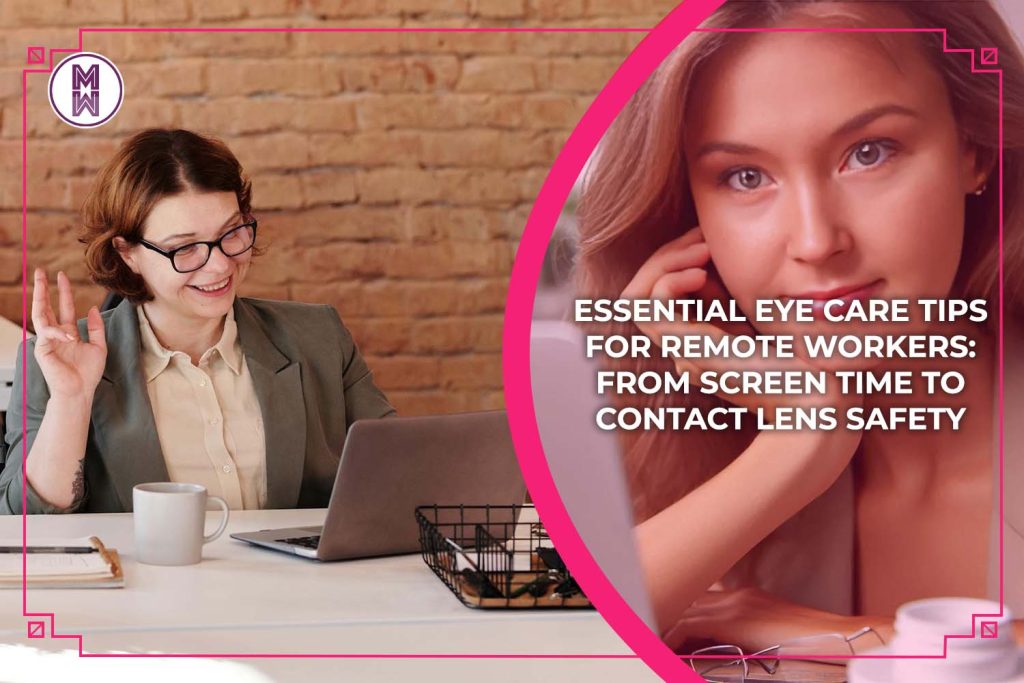
4 Essential Eye Care Tips for Remote Workers: From Screen Time to Contact Lens Safety

For many UK workers, the shift to home-based working arrangements has led to considerable improvements in work-life balance. According to the latest WFH research I have gathered in the field, remote workers, on average, enjoy more sleep and physical activity compared to their office-based counterparts. The elimination of stressful, time-consuming commutes has provided employees with more time to focus on their wellbeing, prompting some businesses to continue allowing hybrid or fully remote setups. In spite of the obvious benefits for employee wellbeing, however, studies have shown that eye health issues like digital eye strain (DES) remain prevalent in this demographic. Research published in the Contact Lens and Anterior Eye journal found that 62.6% of workers across the UK and Ireland experience DES. On average, these individuals spend 9.7 hours a day using devices, with 89.5% reporting ocular symptoms such as dryness, irritation, or blurred vision. Alarmingly, the study also noted that home-based workers were particularly prone to these symptoms, likely due to improper workstation setups and prolonged screen use. If you’re a remote worker like me, taking proactive steps to care for your eyes is essential. Below are four actionable tips to help protect your vision and reduce discomfort during your workday. 1. Pay attention to ergonomics It’s long been understood that a well-designed workspace can impact on the health, wellbeing, and productivity of its occupants. Even tiny changes like positioning your screen in a certain way can minimise musculoskeletal and ocular issues. For this, you can try positioning your screen so that its top edge is at or just below eye level and keep it at least 20-28 inches away from your face. This ensures your eyes remain at a comfortable angle and prevents unnecessary strain. As we discussed in a previous post, lighting also matters when arranging your home office. Avoid positioning your screen directly in front of or behind a bright window, as glare can cause additional strain. Instead, opt for indirect lighting and try using the NuShield anti-glare screen protector for added comfort. Finally, invest in an adjustable and ergonomic chair and desk setup to maintain proper posture, which not only benefits your eyes but also reduces neck and back tension. 2. Choose the right type of contacts If you’re among the four million contact lens-wearers in the UK, you’re aware that the drier environment of a home office can trigger eye discomfort. Central heating, air conditioning, or inadequate ventilation can all contribute to dryness, making it harder to work comfortably for extended periods. Opting for contact lenses with high moisture content, such as silicone hydrogel lenses or those specifically designed for dry eyes, can help alleviate these issues. Some brands to consider are Everclear Elite, Dailies AquaComfort Plus, and 1-Day Acuvue Moist. Everclear Elite lenses for example, have a 47% water content and feature hydrophilic material that retains moisture–perfect for those struggling with dry eyes. Additionally, make sure to prioritise proper hygiene when handling contacts. Always wash your hands when removing or putting them in your eyes and never sleep or shower while wearing contacts. 3. Blink frequently and use eye drops Long hours of staring at screens can reduce your blink rate, leading to dry, irritated eyes. A simple yet effective way to counteract this is to consciously remind yourself to blink more often. You can also use artificial tears or lubricating eye drops to maintain moisture and relieve dryness during your workday. According to the NHS, eye drops with 0.2% sodium hyaluronate, such as those by Kent Pharma, protect the eye from irritations such as contact lenses and dry air. For optimal results, follow the 20-20-20 rule: every 20 minutes, look away from your screen at something 20 feet away for at least 20 seconds. This practise helps relax your eye muscles and reduces the risk of fatigue. 4. Schedule regular eye exams A survey commissioned by Eye Health UK reveals that as many as 19 million British are failing to undergo regular eye tests. In response to these findings, the organisation emphasised that routine eye tests are essential for the prevention of poor health in identifying both issues with sight, as well as other chronic conditions. If you work remotely, it’s especially important to stay on top of your eye health, as prolonged screen use can exacerbate existing issues like myopia or dry eye disease. Aim to visit your optometrist or ophthalmologist at least once every two years—or more frequently if you experience persistent discomfort or vision changes. Regular checkups ensure your eyes remain in top condition and help you maintain long-term productivity and comfort. By paying attention to ergonomics, selecting the right contact lenses, using eye drops, and undergoing routine eye tests, you can reduce the risk of digital eye strain and protect your vision for the future. Small changes in your daily routine can make a significant difference, ensuring that your work-from-home setup supports your overall health and productivity.

how-to-become-a-digital-nomad-with-no-experience
All posts, Digital Nomad Lifestyle, Make Money Online, Remote Work

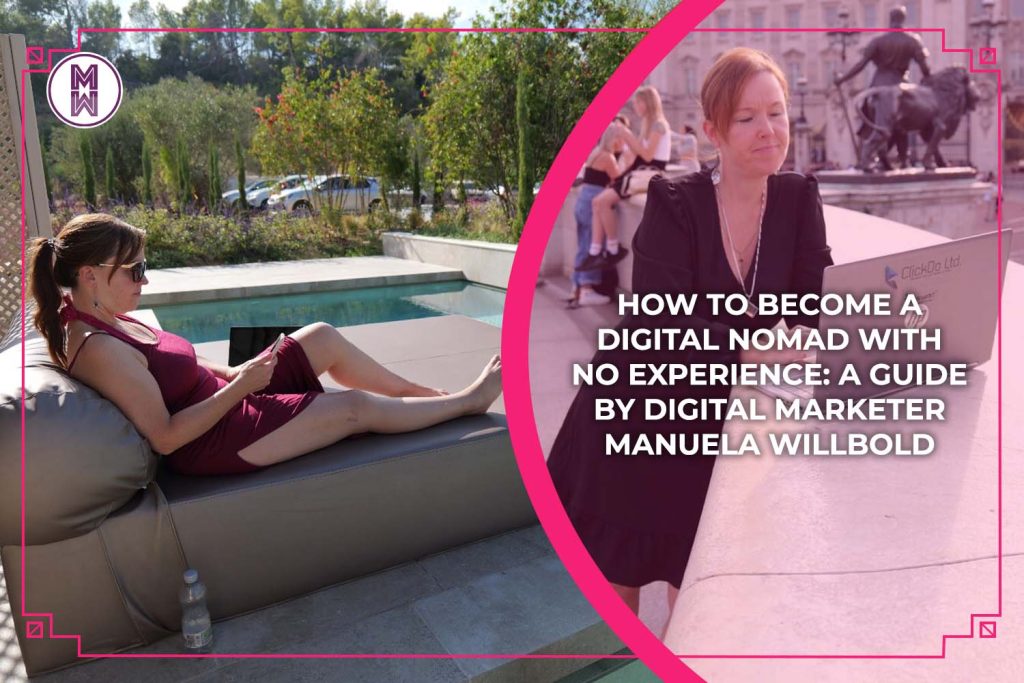
How to Become a Digital Nomad with No Experience: A Guide by Digital Marketer Manuela Willbold

Have you ever dreamed of working from anywhere in the world, without being tied to a specific location or a fixed schedule? Do you want to explore new cultures, learn new skills, and enjoy more freedom and flexibility in your life? If so, you might be interested in becoming a digital nomad like me. Who is a digital nomad? A digital nomad is someone who uses technology to work remotely while travelling or living in different places. Digital nomads can work from home, co-working spaces, cafes, hotels, or anywhere with a reliable internet connection. They can choose their hours, projects, and clients if they deliver quality work and meet deadlines. What does it take to become a digital nomad? But how do you become a digital nomad with no experience? Is it possible to start from scratch and build a successful career as a location-independent professional? The answer is yes, but it requires some planning, preparation, and perseverance. In this digital nomad guide, I will share with you my journey of becoming a digital nomad and give you some tips and advice on how you can do the same. Don’t worry, anyone can achieve this! My Digital Nomad Story: How I Became a Digital Nomad and a Digital Marketer I have always loved travelling and learning new things. I studied education at university and later journalism and blogging in my free time while I worked as a teacher and a content writer and translator for several years. I talk about my journey in more depth here: However, at some point, I felt that something was missing in my life. I wanted more freedom, flexibility, ownership, and challenge in my work. I wanted to be able to work from anywhere in the world, without being limited by geography or time zones. That’s when I discovered the concept of digital nomadism. I was fascinated by the idea of combining work and travel and being able to earn money online while pursuing my passions. I decided to take the plunge and quit my teaching job to become a full-time digital marketer with ClickDo. This was only possible because I’d worked part-time for ClickDo previously, learning the SEO and digital marketing skills that would eventually get me the job of a full-time senior marketer at the agency. Digital marketing is one of the most popular and lucrative fields for digital nomads. I had some basic skills in writing, editing, blogging and social media when I started to work for ClickDo, but I knew that was not enough to land me a decent full-time job online with the salary I wanted. I needed to learn more about SEO, content marketing, email marketing, web design, analytics, and other aspects of digital marketing. I achieved this through learning by doing basically. I learned all about WordPress, SEO, blogging and digital marketing through the guidance of ClickDo’s CEO Fernando Raymond along with online tutorials and SeekaHost University courses. The courses are taught by ClickDo marketing and SEO experts who have years of experience in the industry, and who are also digital nomads themselves. They gave me valuable insights into how to find and manage clients and projects and grow my portfolio online. The journalism course I did for one summer holiday when I was off from teaching also gave me access to a supportive community of fellow students and mentors who helped me improve my writing, research, and journalistic skills. They gave me feedback on my assignments, answered my questions, and shared their own experiences and tips on working as writers, journalists, and even digital nomads. All these experiences encouraged me to start my blog, manuelawillbold.com, where I could showcase my work and build my brand online.   View this post on Instagram   A post shared by Manuela Willbold (@manuw_blogger) On top of my basic pay, I get paid commissions, so I gradually built up a growing stream of income from making additional sales for ClickDo. I built blogs and magazines for ClickDo that would offer guest posting and PR services, which would serve as additional income sources besides client work. Parts of my daily work include content writing, editing, proofreading, SEO, social media marketing, email marketing, web designing, and SEO consultancy for clients around the world. Some of them are small businesses or startups that need help with their online presence or marketing. Other established brands or agencies outsource some of their work to me. Here’s more about my life as a digital marketer and nomad in London: I also started to hire more freelancers as my workload increased. I now work with content creators and publishers, email and social media marketers, salespeople, and web designers to delegate tasks so that we can scale our operations in digital marketing and website monetisation. Thanks to these developments, I can grow my income and reputation as a digital marketer. I constantly learn new skills and expand my portfolio with more diverse and challenging projects, new collaborations, and partnerships, which in turn enable me to charge higher rates for my work and negotiate better terms with my clients. Nowadays, I earn enough money online and remotely to support myself and fund my travels around the world. I have visited over 30 countries and plan to visit many more while working remotely from anywhere I want as a digital nomad. How you can become a digital nomad with no experience As a digital nomad, you can work from home, cafes, co-working spaces, hotels, or anywhere with a reliable internet connection. You can also travel as much or as little as you want if you’re self-employed or depending on your and your employer’s preferences and budget. But is it possible to start this lifestyle without having any prior skills, work, or education in the online world? Yes, you can, and I will guide you through the steps you need to take to become a digital nomad with no experience. I will also highlight some of the necessary skills, work and

How a WordPress Blog Can Empower & Enrich a Woman’s Life
All posts, Blogging, Digital Nomad Lifestyle, Most popular posts

How a WordPress Blog Can Empower & Enrich a Woman’s Life?

Reading and writing has always been empowerment for me. I remember how, as a 5-year-old, I couldn’t wait to finally read the TV newspaper to be able to plan what I was watching and when. In primary school, we wrote poetry albums of friends and I started keeping a diary. When I look at these written testimonies many years later, I feel proud. Proud of the young woman I was then and proud of the woman I am today who still has some of these friends in her life. The diary and the albums documented this journey with images, colourings, photos, comments from friends, teachers and relatives and any other memories such as tickets to unforgettable events, for example. A blog can do this and much more in a flexible online format. A Blog – an Online Presence for Self-Presentation and Realization In the 21st century, the Internet allows us to use new media or implement old methods in new ways. In my opinion, a blog is a kind of online diary, but it offers much more than a traditional diary. A blog offers versatile design options such as written design through websites with text, articles with text, images with text visual design through images, graphics, any artistic illustration, video auditory design through videos, podcasts, music clips, musical accompaniment, etc. Links to other media, posts, channels, etc. Due to this incredible wealth of design options, it is essential to define the purpose and motivation behind a blog in advance. There are now millions of blogs and basically you can divide them all into 2 main categories: Niche blogs – A niche blog focuses on a specific topic. Usually, the blog articles and content are aimed at a specific target group, such as families, professionals in different professional groups, sports fans, etc. Blog topics can thus cover everything from the minimalist blog to the financial blog. Niche blogs are therefore also mostly represented in the business world and companies use blogs to inform and entertain about their products or services. Personal blogs – A personal blog focuses on a person and their topics. Bloggers can document their lives from different angles such as the information aspect or the entertainment aspect. Many bloggers share with their readers where and how they travel, what they eat and cook, what they do for a living or how they live out and realize their hobbies. A personal blog can be designed relatively freely, as long as no generally applicable laws are violated. In this article, I will focus mainly on a personal blog, but show ways in which it can also be used professionally as a CV or portfolio for example, with the main goal of presenting the potential of a blog. What can a WordPress Blog do for a Superwoman? In the digital age, most people search for information via the Internet, more precisely, through search engines such as Google or Bing. In 2020, 81% of global internet users have searched online for products or services, according to SmartInsights.com. Whether this is done with the smartphone, the tablet or the computer, it is the fastest, easiest and often cheapest way to get information and answers fast. If you want to reach people as a private or public person, a blog offers an ideal platform to make your voice heard, since a blog: is easy to create and manage (I explain this step by step in my article “How To Start A Blog” and at the SeekaHost University, which I co-manage and where you can find  blogging online courses with short tutorials). can be created and used cost-effectively. offers endless design possibilities. is a relatively independent mouthpiece that can be built up and designed creatively and on your own. WordPress is the most popular CMS (content management system) among all blog platforms, as it is open-source and freely available to everyone, offering the greatest freedom of design. Compared to other blogging platforms like SquareSpace or Wix, which are used by about 1% of all bloggers, WordPress is used by about 35% of all bloggers worldwide in 2020, according to W3Techs.com. For my personal blog, manuelawillbold.com, I use WordPress, as well as for all the other blogs I manage like the UK Education Blog or the Green Living Blog. To show how differently I have built and designed these 3 blogs, I share the homepage of each one here: My personal blog manuelawillbold.com: My UK Education Blog:  My Green Living Blog: I think one thing becomes clear here: A blog can convey at first glance what it is about through its presentation and content – the message is loud, powerful, and clear visually. And in my opinion, this is the great potential for every female blogger and their empowerment. Self-presentation of many Aspects of a Superwoman through Blogging Based on my three blog examples, it will hopefully be clear that a strong woman blogger is not only one-dimensional, and therefore should not present herself only one-sided online. With my blogs I present my passions: writing/blogging, education, and the environment. Through my personal blog under my own name, I present myself as a private and professional person, blogger and digital nomad. The blog offers me the opportunity: to present myself as a person and my personality through photos, videos and articles to present and convey my interests and skills creatively to share my knowledge, talents, tips and experiences and thus help others to position myself with regards to trending topics and current affairs that are relevant Through my UK Education Blog, I share my professional expertise and present myself as an education expert. The blog offers me the opportunity: to present and share my experience of many years in early childhood and school education to share my knowledge, expertise, emerging scientific facts, news and developments in education to share advice, insights and tips in education on relevant topics Through my Green Living blog, I share my private passion for environmental protection. Here I have the opportunity:

home-office-setup-for-remote-work-during-emergency-lockdown
All posts, Digital Nomad Lifestyle, Remote Work

My Home Office Setup for Remote Work During The Emergency Lockdown

It’s a time of change, it’s a time of novelty. Now that working from home, telecommuting or working remotely is a new reality for many due to social distancing and lockdowns, I am preparing myself to teach and blog from my living room for the foreseeable near future. Recent studies show that remote employees that work online from anywhere are far more productive than in a standard office as they require less time to get ready or commute to work. Let’s see if I can put this theory to the test while creating a comfy home office with hopefully the best home office layout design I can come up with. Analysis of my Current Work Situation at School and Home So far, I have mainly taught in the classroom on a daily basis so this was my main work place. Here, I would have a desk with a laptop and I would spend probably one to two quarters of my day documenting, communicating and sharing my classroom work on the computer. The rest of the work day would be actively teaching, preparing activities, cleaning or tidying and of course most importantly interacting. I have therefore never really set up a so called home office. I usually work on my laptop when blogging, sitting on my sofa, my bed or my bean bag when I am at home. With the majority of my time being spent using the computer during this isolation period, I probably will have to change that. Because apparently posture and efficiency are better in a properly set up home office. How to rearrange the Home and Routine for a better Home Office Experience? Online orders have shot up during national lockdowns and so it is only natural that I start to browse Amazon and Co. for some home office equipment. However, I don’t want to rearrange my whole living room, so I try to look into options to use the furniture I already have and how to optimise it. What can I change in my living room/main home office space? I have a dining table and an office chair. It’s a good height and provides sufficient space. During the first few days I work from here. I feel good, I hold video conference calls and write documents, emails, articles, but somehow I don’t enjoy facing the wall opposite me. I remember that I have an empty space next to my big balcony window with a view out to Canary Wharf. I purchase a foldable home office desk with two slim tables that are adjustable in height and wheels so that it is mobile. I create space for all my things and I feel better looking out the window every now and then and enjoying the light coming in. Another plus is that I’m not next to the fridge any longer, which is tempting to eat more and take more short breaks. Maybe because I am “locked in”, I have more of a desire to look out. I improve my posture by alternating between working while sitting and standing up whenever I feel a need to. This also helps me from getting a stiff neck and back, which I tend to get easily. In between I can stretch or do a few yoga poses to refresh my body and mind. What else to consider apart from the office space? Since I won’t spend much at this stage, I want to focus on the basics plus the non-material aspects. Light Looking at the light, I feel having the desk by the window is a good choice as I’m utilising the natural light as much as possible. I won’t really need a desk lamp for most of the day and by that I also save energy. The sunlight streaming in doesn’t cause any disruption as my desk is in front of the wall, so not directly in the sun. We all know that natural sunlight has a lot of health benefits like being a good source of Vitamin D or increasing energy levels and productivity, so I’m happy with this decision. Space Organisation Taking a look at the organisation of the space around my desk, I have everything I might need to grab or get near me on my shelves. By that I’m avoiding time loss to fetch documents, gadgets or office tools. It’s not cluttered, but organised in different drawers and shelves, so it’s easily available. Nutrition and noise My living room is open plan and the kitchen is part of it. The good thing about it is that I don’t have to go far to grab a drink or food. The bad thing is that it can be tempting to take more snack breaks. However, staying hydrated throughout the day is important for a good performance level. And obviously eating healthy and light meals, so having fruits and vegetables handy should do the job. The other aspect is noise. There aren’t many loud noises around me usually, but of course, preparing food in the kitchen can be distracting. If that was the case, I could consider wearing headphones, playing my music playlist on Spotify or my audio book on Audible. Another tip for people who work better with white noise are sites like Coffitivity or Noisli for background noise that improves focus and productivity. Movement As already mentioned, my adjustable desk allows me to stand up instead of sitting when I feel like it. While standing I could make calls, hold video chats and virtual meetings or record videos such as tutorials. Writing also works while standing, but works slightly better when being seated I feel in terms of my posture. Because my office desk is mobile, I can move it around in my living room, which enables me to watch something on my laptop while cooking for example. However, it is also important for me to allocate time slots where I stretch, do some yoga or a quick workout. Scheduling I realise that I need to

Scroll to Top