Author name: Manuela Willbold

ways-to-boost-a-brand-with-coupon-marketing
All posts, digital marketing

10 Ways to Boost a Brand with Coupon Marketing

Coupon marketing has emerged as a leading tool for branding and lead generation. The escalating challenge of decreasing brand loyalty among shoppers further complicates the landscape, prompting marketers to leverage discount coupon codes as a means of retaining consumers to a certain extent. With 90% of consumers using coupons, it’s clear that there’s a strong demand for deals. Digital coupon redemptions are expected to surpass $90 billion by 2022, highlighting their growing importance. Additionally, 63% of shoppers express a desire for more accessible coupons, and emails featuring coupons see a significant revenue increase of 48% per email. However, it’s important to be aware of potential downsides. Over-reliance on coupons can diminish a brand’s perceived value, and regularly offering discounts may lead to delayed and less profitable sales. Moreover, prominently displaying coupon codes during checkout can contribute to higher cart abandonment rates. Utilising coupon codes in marketing strategies offers numerous benefits for brands, aiding in customer retention and engagement in a competitive marketplace. First Things First – What is Coupon Marketing? Coupon marketing campaigns serve various purposes, offering a straightforward approach to building brand recognition, especially when entering new markets or launching a business. Additionally, coupons effectively attract new customers and facilitate their conversion into loyal patrons. This article delves into the rationale behind employing coupon marketing campaigns, providing insights into effective deployment strategies. Furthermore, it highlights key considerations to avoid potential pitfalls and ensure the campaign contributes positively to business growth. Shoppers are drawn to savings, making coupons and discount codes a compelling tool for digital marketers introducing new customers to products or services. 10 Top Coupon Marketing Strategies to Boost Your Brand Value and Sales: Coupon marketing is a powerful tool for marketers looking to attract new customers, retain existing ones, and boost overall brand awareness. As a marketer, I understand the significance of special offers in sales and lead generation. It can enhance a brand’s presence and appeal so below I list the best ways to leverage coupon marketing strategies: 1. Partner with Top Coupon Sites Collaborate with popular coupon sites to feature your discounts and offers. This increases visibility and drives traffic to a brand. In the past, coupons in the UK predominantly targeted grocery items, but today, the range of categories has significantly broadened. Top UK coupon websites now offer vouchers applicable to a diverse array of products and services. These coupons can be utilised for various purposes, spanning from web hosting packages to entertainment and beauty treatments, among others. Several platforms offer access to over 24,000 brands and more than 100,000 coupon codes, allowing users to take advantage of the most competitive cashback and commission rates available. 2. Plan Exclusive Deals While spur-of-the-moment deals may create initial excitement, meticulously planned ones sustain long-term interest. An actionable step involves crafting a 12-month forecast of potential deals, and strategically aligning them with notable dates and industry events. For instance, in the electronics sector, integrating offers around tech events can provide a significant advantage. Research indicates a substantial demand for deals, with nearly 60% of consumers visiting coupon websites every week, or even multiple times daily. By preplanning deals, businesses can consistently provide fresh and enticing offerings to cater to this eager customer base. 3. Utilise Digital Coupons Effectively Coupons hold significant value for e-commerce platforms as they serve as catalysts for customer action. Particularly, new or emerging brands stand to gain considerable advantages from offering coupons. According to research conducted by Inmar Intelligence, 54% of shoppers are inclined to purchase from a new brand due to its cost-effectiveness, with approximately one-third being influenced by digital coupons. By implementing an effective coupon email marketing strategy, marketers can target customers in their preferred online spaces by email for example. By leveraging factors like relevance, timeliness, and perceived value within coupon email campaigns, marketers can effectively enhance exposure and drive customer engagement to product or service pages. 4. Combine Seasonal and Event-Based Promotions Utilising a promotional calendar allows for strategic timing of promotions to achieve optimal impact, aligning them with holidays, special occasions, or seasonal trends. Customising a marketing timeline based on targeted events, whether it’s Boxing Day for UK customers or Lunar New Year for buyers in Asia, enhances effectiveness. It also increases brand engagement especially on social media as you can see in one of the posts I’ve designed for the londonbusinessnews.com magazine in our London Life FB page to encourage more people to read our articles: For instance, when planning sales like Black Friday or Valentine’s Day, ensure to distribute discounts and coupon codes via social media and email to effectively promote what you offer in connection with the event. 5. Leverage Social Media Another effective tactic to enhance your coupon marketing strategy involves promoting new products and discounts through social media channels. With billions of users active on platforms such as Instagram, Facebook, and Twitter, incorporating regular discount sharing into your strategy is essential. Nonetheless, caution should be exercised to avoid excessive coupon usage. Constant sales may diminish the perceived value of your products, potentially leading your audience to view your coupon strategy as merely a ploy to acquire more emails or followers through lead magnets. It’s important to link your discount offers with events or compelling reasons and to utilise not only your social media channels but also groups and topical pages as I showed above. On top of that, you can also run paid social media ads for your discount campaigns where you can target very specific groups. 6. Strategic Email Segmentation Segmenting your email list according to behaviour, interests, and purchase history enables the creation of targeted coupon campaigns for each subgroup. To implement this strategy effectively, review your CRM data to discern customer trends and utilise insights garnered to craft personalised offers using email marketing tools. Tailoring discount coupon emails not only enriches the customer experience but also boosts conversion rates. Furthermore, consider incorporating coupon links into various types of emails, including signup or subscription confirmation emails, promotional content, and other

top-niche-and-omnichannel-marketing-tips
All posts, digital marketing, SEO copywriting

5 Effective Ways to Utilise Niche Marketing & Omnichannel Marketing

Niche marketing is a strategy that focuses on a specific segment of the market that has a high potential for growth and profitability and I share more about it in this niche marketing guide. Today’s customers want personalized experiences, which study results by Accenture show where they found that over 91% of consumers prefer shopping with brands offering relevant deals. Niche marketing in combination with omnichannel marketing can help a brand stand out from the competition, attract loyal customers via the right channels, and increase brand awareness. However, it also comes with some challenges, such as focusing on the right niche, creating relevant and effective content, and reaching the key target audience. As a digital marketer and SEO copywriter I share marketing tips based on my experience as a blogger and media strategist working with ClickDo and SeekaHost, two innovative digital businesses in the UK. So, let’s delve in. Tip #1: Conduct thorough keyword research Keyword research is the foundation of any successful niche marketing campaign. You need to find out what your potential customers are searching for online, what their pain points are, and what kind of solutions they are looking for. You can use various SEO tools, such as Google Keyword Planner, Ubersuggest, or SEMrush, to discover relevant keywords for your niche. Analyse your competitors’ keywords and see what gaps you can fill in the market. Once you have a list of keywords, you should optimize your website content, blog posts, and social media posts for them. This will help you rank higher on search engines and drive more organic traffic to your website. Tip #2: Create engaging and informative content for multiple channels Content is the key to building trust and authority in your niche. You need to create content that showcases your expertise, provides value to your audience, and solves their problems. You can use different formats of content, such as blog posts, guest articles, press releases, eBooks, podcasts, videos, social media posts or infographics, depending on your niche and audience preferences. Use storytelling techniques to make your content more engaging and memorable. For example, you can share your personal experiences, case studies, success stories, or customer testimonials to illustrate your points. You should also include clear calls to action in your content to encourage your readers to take the next step. I share more tips on lifestyle branding via marketing channels here: Tip #3: Expand your online presence with social media and email marketing Social media and email marketing are two powerful ways to connect with your niche audience and grow your online presence via additional channels. You should use social media platforms that are relevant to your niche and where your audience hangs out. For example, if you are targeting young professionals, you might want to use LinkedIn or Twitter. If you are targeting visual learners, you might want to use Instagram or Pinterest. Create a consistent brand voice and style tailored to all your social media channels. You should post regularly, interact with your followers, share valuable and unique content, and join niche-related groups or communities. Email marketing is another effective way to nurture your leads and convert them into customers. You should build an email list by offering freebies, exclusive deals or incentives via own your website or blog or even other websites where you can gain more exposure. You should then send them personalized and relevant emails that offer more value, build trust, and persuade them to buy from you. Establishing a loyal followership via all your channels will ensure that your brand continues to be visible and interacted with. Tip #4: Collaborate with influencers and experts Influencer marketing is a strategy that involves partnering with influential people in your niche who have a large and engaged following. Influencer marketing can help you reach a wider audience, increase your brand awareness, generate more leads, and boost your sales. However, you need to choose the right influencers for your niche marketing campaign. Look for influencers who have a similar target audience as yours, share similar values and goals as yours, and have a high level of trust and credibility among their followers. You should also negotiate a fair compensation and set clear expectations and goals for the collaboration. You can ask the influencers to promote your products or services, create sponsored content for you, or co-create content with you. Tip #5: Monitor and measure your results The last tip for niche marketing via different channels is to monitor and measure your results regularly. You need to track various metrics, such as website traffic, social media engagement, email open rates, click-through rates, conversions, sales revenue etc., to see how well your niche and omnichannel marketing campaign is performing. Use analytics tools such as Google Analytics or Clicky Analytics to analyse your data and gain insights into your audience behaviour patterns preferences etc. You should then use this information to improve your niche marketing strategy accordingly. Test different elements of your campaign to see what works best for your niche audience. See how I do this for websites I manage here: Closing Thoughts Niche and omnichannel marketing combined is a great way to differentiate yourself from the competition and grow your online presence. However, it requires a lot of tailored research, planning, creativity, and execution. You need to find the right niche and channels, create relevant and engaging content tailored accordingly, reach, and connect with your target audience, collaborate with influencers and experts, and monitor and measure your results. By following these five trending niche and omnichannel marketing tips for digital marketers and SEO consultants, you can achieve success in your niche and omnichannel marketing campaign. If you need any help with niche marketing or any other aspect of digital marketing, you can contact me or the team at ClickDo or SeekaHost. We have the expertise and experience to help you grow your online presence and business in any niche.

best-ways-to-secure-backlinks-from-reputable-websites-to-boost-seo--branding
All posts, digital marketing, SEO copywriting

Best 20 Backlink Strategies to boost SEO & Branding

Google has confirmed that ranking without links is really hard and has updated its link-building policies hundreds of times and it will continue to do so. I write SEO-friendly web content or blog content and optimise images, titles and meta tags for search engines to achieve higher ranks. I use analytics and link analysis tools to analyse relevant and easy-to-rank keywords, competitor statistics and to monitor a website's performance. I also work in content publishing, link-building, social media and email marketing. As a Digital Marketing and PR Strategist, I’m passionate about creating brand awareness and online visibility through top-notch content publications on suitable platforms. I provide expert guidance on news and press release publications, guest publications, interviews, features and more – check out some of my case studies: Links are the most important ranking element, and the Google Core Algorithm is still link-based. To make sure that you do link-building the right way so that you achieve the best results, we decided to compile a useful list of link-building strategies you should try! From my viewpoint, appropriate link-building is not straightforward and there is no general recipe, there are numerous white hat SEO and link-building tactics you can use to boost your website’s ranks on search engines. Here’s more about my take on guest posting as a  digital marketer at ClickDo: 1. Skyscraper Technique Skyscraping is one of the most popular link-building strategies. It takes a lot of work, but if you do it the right way, you’ll get quality backlinks, traffic, and business leads. It’s a combination of high-quality content, in-depth research, competitor backlink analysis and email outreach. The following are the main steps for the skyscraper technique: Find relevant content with high-quality backlinks; Find the website contact and discuss collaboration options; Improve your content and outreach to potential customers or best let them find you through high-quality content that ranks. 2. Link Building with Content Executing this challenging yet highly successful strategy can be another effective method to rank well on Google. Write content that will draw in readers, share it on social media, and drive referral traffic. Make sure your content is well-structured and free from grammatical errors. There are many web design techniques and tools available to help you make your content more engaging and eye-catching. Using a blog for link building involves creating high-quality content that attracts links from other websites, thereby improving your search engine rankings. Here’s a step-by-step guide on using your blog for link building: Develop high-quality, informative, and engaging blog posts that naturally attract links. Identify topics relevant to your niche with the potential for link attraction through keyword research. Ensure your blog posts are well-optimised for search engines by using relevant keywords in titles, headers, and content. Actively share your blog posts on social media and other channels to increase visibility. You can use a tool to plan when your social media posts go out. Contribute to other reputable blogs in your industry, including a link back to your own blog in the author bio or content. Connect with influencers and bloggers in your niche to foster natural link-building opportunities. Link to your own relevant blog posts within your content to enhance SEO and encourage exploration. Identify broken links on other websites and suggest your content as a replacement. Develop comprehensive guides or tools that provide unique value and attract organic links. Engage in forums and groups, sharing your expertise and linking to your blog when relevant. Use tools to track your website’s performance and new backlinks, adjusting strategies as needed. Remember, building high-quality, natural backlinks takes time and effort. Focus on providing value to your audience, and over time, you’ll likely see an increase in the number of links pointing to your blog. 3. Create a Blog Effective link-building using a variety of dynamic tactics is made possible by a blog or blog network. By consistently churning out valuable, niche-specific content, your blog becomes a go-to resource for others in the industry, naturally attracting backlinks. Leveraging internal linking not only enhances user experience but also signals to search engines the depth and interconnectedness of your content. There are opportunities for reciprocal linking when you guest write on reputable sites and work with influencers, which broadens the audience for your network. Social media plays a crucial role, as sharing blog posts amplifies visibility and encourages others to link back to your content. Moreover, being featured on resource pages or roundups within your niche establishes your blog as a valuable reference, resulting in valuable backlinks. Proactive approaches, such as identifying broken links on other sites and offering your content as a replacement, contribute to a robust link-building strategy. In essence, a well-maintained blog or blog network becomes a strategic nexus for organic link growth, solidifying your online presence and authority. 4. Educational Content and Case Studies to Invite Collaborators Google SERP is full of “how to” articles, and if yours ranks well, people will want to work with you. You can always focus on a specific audience with your insights and opinions, or you can provide step-by-step instructions and video tutorials. Most people are looking for solutions to questions. A case study can be a great source of backlinks! Case studies always give new information. Ensure you have good data, research, and try to test industry myths. Review products or services like an expert. 5. White Papers White papers are widely used in B2B, but you don’t need to be a company to conduct in-depth industry analysis. You just need to share your perspective, data, and knowledge that others can use. White papers are an excellent way to network and build relationships. 6. Guest Posts Backlinks can be obtained through guest posting. Conduct website research, develop excellent content, and try to post it on a reputable site. They normally have tight guest posting standards and getting your work accepted can take a long time. It takes a little longer, but it works, probably even better than outreach in some cases.

how-to-become-a-digital-nomad-with-no-experience
All posts, Digital Nomad Lifestyle, Make Money Online, Remote Work

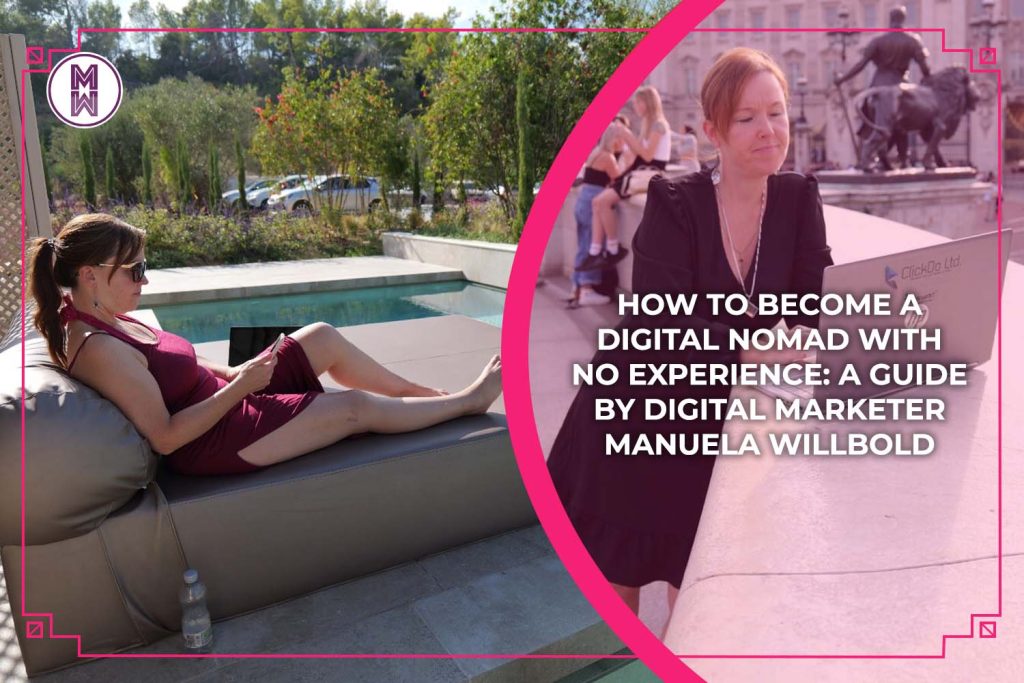
How to Become a Digital Nomad with No Experience: A Guide by Digital Marketer Manuela Willbold

Have you ever dreamed of working from anywhere in the world, without being tied to a specific location or a fixed schedule? Do you want to explore new cultures, learn new skills, and enjoy more freedom and flexibility in your life? If so, you might be interested in becoming a digital nomad like me. Who is a digital nomad? A digital nomad is someone who uses technology to work remotely while travelling or living in different places. Digital nomads can work from home, co-working spaces, cafes, hotels, or anywhere with a reliable internet connection. They can choose their hours, projects, and clients if they deliver quality work and meet deadlines. What does it take to become a digital nomad? But how do you become a digital nomad with no experience? Is it possible to start from scratch and build a successful career as a location-independent professional? The answer is yes, but it requires some planning, preparation, and perseverance. In this digital nomad guide, I will share with you my journey of becoming a digital nomad and give you some tips and advice on how you can do the same. Don’t worry, anyone can achieve this! My Digital Nomad Story: How I Became a Digital Nomad and a Digital Marketer I have always loved travelling and learning new things. I studied education at university and later journalism and blogging in my free time while I worked as a teacher and a content writer and translator for several years. I talk about my journey in more depth here: However, at some point, I felt that something was missing in my life. I wanted more freedom, flexibility, ownership, and challenge in my work. I wanted to be able to work from anywhere in the world, without being limited by geography or time zones. That’s when I discovered the concept of digital nomadism. I was fascinated by the idea of combining work and travel and being able to earn money online while pursuing my passions. I decided to take the plunge and quit my teaching job to become a full-time digital marketer with ClickDo. This was only possible because I’d worked part-time for ClickDo previously, learning the SEO and digital marketing skills that would eventually get me the job of a full-time senior marketer at the agency. Digital marketing is one of the most popular and lucrative fields for digital nomads. I had some basic skills in writing, editing, blogging and social media when I started to work for ClickDo, but I knew that was not enough to land me a decent full-time job online with the salary I wanted. I needed to learn more about SEO, content marketing, email marketing, web design, analytics, and other aspects of digital marketing. I achieved this through learning by doing basically. I learned all about WordPress, SEO, blogging and digital marketing through the guidance of ClickDo’s CEO Fernando Raymond along with online tutorials and SeekaHost University courses. The courses are taught by ClickDo marketing and SEO experts who have years of experience in the industry, and who are also digital nomads themselves. They gave me valuable insights into how to find and manage clients and projects and grow my portfolio online. The journalism course I did for one summer holiday when I was off from teaching also gave me access to a supportive community of fellow students and mentors who helped me improve my writing, research, and journalistic skills. They gave me feedback on my assignments, answered my questions, and shared their own experiences and tips on working as writers, journalists, and even digital nomads. All these experiences encouraged me to start my blog, manuelawillbold.com, where I could showcase my work and build my brand online.   View this post on Instagram   A post shared by Manuela Willbold (@manuw_blogger) On top of my basic pay, I get paid commissions, so I gradually built up a growing stream of income from making additional sales for ClickDo. I built blogs and magazines for ClickDo that would offer guest posting and PR services, which would serve as additional income sources besides client work. Parts of my daily work include content writing, editing, proofreading, SEO, social media marketing, email marketing, web designing, and SEO consultancy for clients around the world. Some of them are small businesses or startups that need help with their online presence or marketing. Other established brands or agencies outsource some of their work to me. Here’s more about my life as a digital marketer and nomad in London: I also started to hire more freelancers as my workload increased. I now work with content creators and publishers, email and social media marketers, salespeople, and web designers to delegate tasks so that we can scale our operations in digital marketing and website monetisation. Thanks to these developments, I can grow my income and reputation as a digital marketer. I constantly learn new skills and expand my portfolio with more diverse and challenging projects, new collaborations, and partnerships, which in turn enable me to charge higher rates for my work and negotiate better terms with my clients. Nowadays, I earn enough money online and remotely to support myself and fund my travels around the world. I have visited over 30 countries and plan to visit many more while working remotely from anywhere I want as a digital nomad. How you can become a digital nomad with no experience As a digital nomad, you can work from home, cafes, co-working spaces, hotels, or anywhere with a reliable internet connection. You can also travel as much or as little as you want if you’re self-employed or depending on your and your employer’s preferences and budget. But is it possible to start this lifestyle without having any prior skills, work, or education in the online world? Yes, you can, and I will guide you through the steps you need to take to become a digital nomad with no experience. I will also highlight some of the necessary skills, work and

guest-and-pr-publication-case-study-analysis-menuall-willbold-blog
All posts, digital PR, SEO copywriting

How effective are Guest Posts, Expert Guides, Listicles and Press Releases? – A Case Study Analysis of the Green Living Blog

Many more people are asking if it’s worth getting published on the Green Living Blog hence why I want to talk to you about recent case studies I have analysed as the digital marketer and SEO strategist at ClickDo which you can also view in this video: . I want to start by highlighting that the magazine achieves an average of 2k views monthly and over 8k events as you can see below. This means that the visitors are very engaged and interact with the content by clicking on added internal and external links, buttons, images, videos, or embedded posts. For people looking to get published or featured on the Green Living Blog or who are in search of guest posting and digital PR opportunities, the platform is becoming more attractive with such metrics. It is fair to say that with over 8k actions within a month, the chances of achieving clicks and conversions with guest posting here are higher, apart from the obvious SEO benefits. The Green Living Blog offers different forms of publications as a media platform, and I had a deeper look at these different formats and how they perform in terms of SEO and exposure – please remember that the shared statistics are correct as of the date of this publication and are subject to change. The magazine publishes content covering eco topics in categories like business, technology, retail, home and living as well as directory posts and listicles which feature top-rated businesses and organisations in the sustainability sector. It invites anyone looking to share expert advice, eco insights, tips, and hacks to get featured, so there is an opportunity for eco representatives as well as experts and authors to get guest content live. Let’s start by looking at the most common and preferred format – the guest post. Guest Post Case Study: Advantages and Disadvantages of Bioplastics Bioplastics: Pros & Cons and are they the Future? The authors at the Green Living Blog regularly publish editorial articles and guest posts. This specific article has been performing very well as a guest post (their editorial articles perform well too). As you can see it has reached a significant amount of engagement within just 3 months with nearly 1k clicks and nearly 20k impressions from Google alone, excluding additional engagement from Bing, Yahoo, and direct clicks for example. This post has been ranking successfully because it covers popular related keywords such as “pros and cons of bioplastics” or “bioplastics” which it ranks for on Google. For a guest post to achieve this, it’s important that it targets keywords with a lower keyword difficulty and that it is optimised for search engines also in terms of the images and articles metadata. The expert team can assist with SEO optimization as they work closely with the SEO experts at ClickDo. Expert Guide Case Study: The Role HVAC Plays in Green Building Design Why HVAC plays a Key Role in Green Building Design Moving on to another popular publication format, here is an expert guide case study. You will see a section called Green Expert Guides when you come to the Green Living Blog homepage and that’s where how-to guides, opinion pieces and tutorials are featured. Having taken a closer look at this case study, the advantages of such a publication format are clear, especially if the author or featured brand is looking to boost its credibility and visibility. As you can see in the statistics below this expert guide ranks on Google for keywords such as “HVAC system in green building” or “green building design”, which leads to it being noticed by readers looking for very niche and specific information, reaching a knowledgeable audience that is more likely to engage with the added resources. This helps give an author or business better visibility within their niche, establishing them as experts among a targeted audience. Being found for search terms that would establish a brand that is not yet well known and searched for adds further benefits to such a format. The GLB team can provide content support with such formats where required to make the expert guide as effective as possible to ensure that the shared insights reach the right people via the platform. Listicle Case Study: Top Green Apps to Tackle Environmental Issues 20 Green Apps to Tackle 21 Environmental Issues Helping Us Live Greener Lives Listicles or list posts that list top-rated brands, products or services are another speciality at the GLB magazine. This format helps the business and brand to be referenced effectively on the Internet. Readers search for quick answers nowadays and listicles, directories and comparisons provide a great overview of whatever one is looking for. As you can see in the data below this listicle has received nearly 40k impressions on Google alone over the last 6 months and ranks for several keywords including very competitive search terms such as “green apps” and “environmental apps” which helps to introduce the brands listed to people that might have never come across it. The listed brands can share this listicle where they are mentioned as a testament to their work and success. Recommendations intrigue many looking for suitable options in their search, hence why this format provides a great boost in terms of marketing, SEO, and trust. Media Release Case Study: WNBR London 2023 – 100 Years of Naked Bike Riding for Sustainability World Naked Bike Ride London 2023 – 100 years of Naked Bike Riding for Sustainability Press release publications which are called media release publications are another format that works well for seasonal events and announcements. This particular case study shows how a tailored and keyword-optimised release can achieve significant results, especially shortly after publication which matters for more time-sensitive publication formats such as this. The below statistics show that the media release ranks for search terms such as “WNBR 2023” and “WNBR London 2023”, which helps with creating awareness of an event and introducing a brand to people looking for something specific

Scroll to Top