digital marketing

top-niche-and-omnichannel-marketing-tips
All posts, digital marketing, SEO copywriting

5 Effective Ways to Utilise Niche Marketing & Omnichannel Marketing

Niche marketing is a strategy that focuses on a specific segment of the market that has a high potential for growth and profitability and I share more about it in this niche marketing guide. Today’s customers want personalized experiences, which study results by Accenture show where they found that over 91% of consumers prefer shopping with brands offering relevant deals. Niche marketing in combination with omnichannel marketing can help a brand stand out from the competition, attract loyal customers via the right channels, and increase brand awareness. However, it also comes with some challenges, such as focusing on the right niche, creating relevant and effective content, and reaching the key target audience. As a digital marketer and SEO copywriter I share marketing tips based on my experience as a blogger and media strategist working with ClickDo and SeekaHost, two innovative digital businesses in the UK. So, let’s delve in. Tip #1: Conduct thorough keyword research Keyword research is the foundation of any successful niche marketing campaign. You need to find out what your potential customers are searching for online, what their pain points are, and what kind of solutions they are looking for. You can use various SEO tools, such as Google Keyword Planner, Ubersuggest, or SEMrush, to discover relevant keywords for your niche. Analyse your competitors’ keywords and see what gaps you can fill in the market. Once you have a list of keywords, you should optimize your website content, blog posts, and social media posts for them. This will help you rank higher on search engines and drive more organic traffic to your website. Tip #2: Create engaging and informative content for multiple channels Content is the key to building trust and authority in your niche. You need to create content that showcases your expertise, provides value to your audience, and solves their problems. You can use different formats of content, such as blog posts, guest articles, press releases, eBooks, podcasts, videos, social media posts or infographics, depending on your niche and audience preferences. Use storytelling techniques to make your content more engaging and memorable. For example, you can share your personal experiences, case studies, success stories, or customer testimonials to illustrate your points. You should also include clear calls to action in your content to encourage your readers to take the next step. I share more tips on lifestyle branding via marketing channels here: Tip #3: Expand your online presence with social media and email marketing Social media and email marketing are two powerful ways to connect with your niche audience and grow your online presence via additional channels. You should use social media platforms that are relevant to your niche and where your audience hangs out. For example, if you are targeting young professionals, you might want to use LinkedIn or Twitter. If you are targeting visual learners, you might want to use Instagram or Pinterest. Create a consistent brand voice and style tailored to all your social media channels. You should post regularly, interact with your followers, share valuable and unique content, and join niche-related groups or communities. Email marketing is another effective way to nurture your leads and convert them into customers. You should build an email list by offering freebies, exclusive deals or incentives via own your website or blog or even other websites where you can gain more exposure. You should then send them personalized and relevant emails that offer more value, build trust, and persuade them to buy from you. Establishing a loyal followership via all your channels will ensure that your brand continues to be visible and interacted with. Tip #4: Collaborate with influencers and experts Influencer marketing is a strategy that involves partnering with influential people in your niche who have a large and engaged following. Influencer marketing can help you reach a wider audience, increase your brand awareness, generate more leads, and boost your sales. However, you need to choose the right influencers for your niche marketing campaign. Look for influencers who have a similar target audience as yours, share similar values and goals as yours, and have a high level of trust and credibility among their followers. You should also negotiate a fair compensation and set clear expectations and goals for the collaboration. You can ask the influencers to promote your products or services, create sponsored content for you, or co-create content with you. Tip #5: Monitor and measure your results The last tip for niche marketing via different channels is to monitor and measure your results regularly. You need to track various metrics, such as website traffic, social media engagement, email open rates, click-through rates, conversions, sales revenue etc., to see how well your niche and omnichannel marketing campaign is performing. Use analytics tools such as Google Analytics or Clicky Analytics to analyse your data and gain insights into your audience behaviour patterns preferences etc. You should then use this information to improve your niche marketing strategy accordingly. Test different elements of your campaign to see what works best for your niche audience. See how I do this for websites I manage here: Closing Thoughts Niche and omnichannel marketing combined is a great way to differentiate yourself from the competition and grow your online presence. However, it requires a lot of tailored research, planning, creativity, and execution. You need to find the right niche and channels, create relevant and engaging content tailored accordingly, reach, and connect with your target audience, collaborate with influencers and experts, and monitor and measure your results. By following these five trending niche and omnichannel marketing tips for digital marketers and SEO consultants, you can achieve success in your niche and omnichannel marketing campaign. If you need any help with niche marketing or any other aspect of digital marketing, you can contact me or the team at ClickDo or SeekaHost. We have the expertise and experience to help you grow your online presence and business in any niche.
best-ways-to-secure-backlinks-from-reputable-websites-to-boost-seo--branding
All posts, digital marketing, SEO copywriting

Best 20 Backlink Strategies to boost SEO & Branding

Google has confirmed that ranking without links is really hard and has updated its link-building policies hundreds of times and it will continue to do so. I write SEO-friendly web content or blog content and optimise images, titles and meta tags for search engines to achieve higher ranks. I use analytics and link analysis tools to analyse relevant and easy-to-rank keywords, competitor statistics and to monitor a website's performance. I also work in content publishing, link-building, social media and email marketing. As a Digital Marketing and PR Strategist, I’m passionate about creating brand awareness and online visibility through top-notch content publications on suitable platforms. I provide expert guidance on news and press release publications, guest publications, interviews, features and more – check out some of my case studies: Links are the most important ranking element, and the Google Core Algorithm is still link-based. To make sure that you do link-building the right way so that you achieve the best results, we decided to compile a useful list of link-building strategies you should try! From my viewpoint, appropriate link-building is not straightforward and there is no general recipe, there are numerous white hat SEO and link-building tactics you can use to boost your website’s ranks on search engines. Here’s more about my take on guest posting as a  digital marketer at ClickDo: 1. Skyscraper Technique Skyscraping is one of the most popular link-building strategies. It takes a lot of work, but if you do it the right way, you’ll get quality backlinks, traffic, and business leads. It’s a combination of high-quality content, in-depth research, competitor backlink analysis and email outreach. The following are the main steps for the skyscraper technique: Find relevant content with high-quality backlinks; Find the website contact and discuss collaboration options; Improve your content and outreach to potential customers or best let them find you through high-quality content that ranks. 2. Link Building with Content Executing this challenging yet highly successful strategy can be another effective method to rank well on Google. Write content that will draw in readers, share it on social media, and drive referral traffic. Make sure your content is well-structured and free from grammatical errors. There are many web design techniques and tools available to help you make your content more engaging and eye-catching. Using a blog for link building involves creating high-quality content that attracts links from other websites, thereby improving your search engine rankings. Here’s a step-by-step guide on using your blog for link building: Develop high-quality, informative, and engaging blog posts that naturally attract links. Identify topics relevant to your niche with the potential for link attraction through keyword research. Ensure your blog posts are well-optimised for search engines by using relevant keywords in titles, headers, and content. Actively share your blog posts on social media and other channels to increase visibility. You can use a tool to plan when your social media posts go out. Contribute to other reputable blogs in your industry, including a link back to your own blog in the author bio or content. Connect with influencers and bloggers in your niche to foster natural link-building opportunities. Link to your own relevant blog posts within your content to enhance SEO and encourage exploration. Identify broken links on other websites and suggest your content as a replacement. Develop comprehensive guides or tools that provide unique value and attract organic links. Engage in forums and groups, sharing your expertise and linking to your blog when relevant. Use tools to track your website’s performance and new backlinks, adjusting strategies as needed. Remember, building high-quality, natural backlinks takes time and effort. Focus on providing value to your audience, and over time, you’ll likely see an increase in the number of links pointing to your blog. 3. Create a Blog Effective link-building using a variety of dynamic tactics is made possible by a blog or blog network. By consistently churning out valuable, niche-specific content, your blog becomes a go-to resource for others in the industry, naturally attracting backlinks. Leveraging internal linking not only enhances user experience but also signals to search engines the depth and interconnectedness of your content. There are opportunities for reciprocal linking when you guest write on reputable sites and work with influencers, which broadens the audience for your network. Social media plays a crucial role, as sharing blog posts amplifies visibility and encourages others to link back to your content. Moreover, being featured on resource pages or roundups within your niche establishes your blog as a valuable reference, resulting in valuable backlinks. Proactive approaches, such as identifying broken links on other sites and offering your content as a replacement, contribute to a robust link-building strategy. In essence, a well-maintained blog or blog network becomes a strategic nexus for organic link growth, solidifying your online presence and authority. 4. Educational Content and Case Studies to Invite Collaborators Google SERP is full of “how to” articles, and if yours ranks well, people will want to work with you. You can always focus on a specific audience with your insights and opinions, or you can provide step-by-step instructions and video tutorials. Most people are looking for solutions to questions. A case study can be a great source of backlinks! Case studies always give new information. Ensure you have good data, research, and try to test industry myths. Review products or services like an expert. 5. White Papers White papers are widely used in B2B, but you don’t need to be a company to conduct in-depth industry analysis. You just need to share your perspective, data, and knowledge that others can use. White papers are an excellent way to network and build relationships. 6. Guest Posts Backlinks can be obtained through guest posting. Conduct website research, develop excellent content, and try to post it on a reputable site. They normally have tight guest posting standards and getting your work accepted can take a long time. It takes a little longer, but it works, probably even better than outreach in some cases.

guest-and-pr-publication-case-study-analysis
digital marketing, digital PR

How effective are Guest & PR Publications – a Case Study Analysis of the UK Education Blog

Many more people are asking if it’s worth getting published on the UK Education Blog hence why I want to talk to you about recent case studies I have analysed as the digital marketer and SEO strategist at ClickDo. I want to start by highlighting that the magazine has recently reached nearly 5,000 visitors in a month, meaning it gets up to 200 visitors daily. For people looking to get published or featured on the UK Education Blog or who are in search of guest posting and digital PR opportunities the platform is becoming more attractive with such metrics. It is fair to say that with over 15k actions within a month the chances of achieving clicks and conversions with guest posting here are higher, apart from the obvious SEO benefits. The UK Education Blog offers different forms of publications as a media platform, and I had a deeper look at these different formats and how they perform in terms of SEO and exposure – please remember that the shared statistics are correct as of the date of this publication and are subject to change. The magazine publishes content covering education topics in categories like learning, teaching, schooling, student life, career, EdTech as well as directory posts and listicles which feature top rated businesses and organisations in the education sector. It invites anyone looking to share expert advice, education insights, tips, and hacks to get featured, so there is an opportunity for education representatives as well as experts and authors to get guest content live. I summarise the findings in this video: Let’s start by looking at the most common and popular format – the guest post. Guest Post Case Study: Advantages and Disadvantages of Living in a College Dorm The authors at the UK Education Blog regularly publish editorial articles and guest posts. This specific article has been performing very well as a guest post (their editorial articles perform well too). As you can see it has reached a significant amount of engagement within one year with nearly 2k clicks and nearly 26k impressions from Google alone, excluding additional engagement from Bing, Yahoo, and direct clicks for example. This post has been ranking successfully because it covers popular related keywords such as “pros and cons of living in a dorm” or “benefits of living in a dorm” which it ranks for on Google. For a guest post to achieve this, it’s important that it targets keywords with a lower keyword difficulty and that it is optimised for search engines also in terms of the images and articles meta data. The expert team can assist with SEO optimization as they work closely with the SEO experts at ClickDo. Interview Case Study: A Conversation with WuKong Education at the London EdTechX Summit Moving on to another popular publication format, here is an interview case study. You will see a section called Media Releases when you come to the UK Education Blog homepage and that’s where interviews, opinion pieces, event coverage and media releases are featured. Having taken a closer look at this case study, the advantages of such a publication format are clear, especially if it is linked with a brand launch or another significant business event or announcement. As you can see in the statistics below this interview ranks on Google for keywords such as the brand’s name, the event name as well as other related search terms such as “wukong maths”. This helps with introducing a brand to the market in connection with a personal or background story while being found for search terms that would establish a brand that is not yet well known and searched for. It also benefits the entrepreneur with building their personal brand alongside their business brand. For the founder an interview offers the opportunity to publicly stand behind the brand, product, or service and to showcase the personal journey and motivation. The UKEB expert team carefully curate the Q&As together with the interviewee to ensure that their focus and USP are incorporated effectively for the best possible outcomes and performance. An interview publication is also beneficial for a Google Knowledge Panel for example, which serves as a great online asset for any entrepreneur and ClickDo’s founder Fernando Raymond explores this in more depth on our ClickDo YouTube channel: Social Media Case Study: Gaining additional Exposure through Network Shares for Mentioned Businesses/Organisations What provides every post with an additional boost is sharing them on social media. The UKEB magazine shares all the published posts on their channels, which can boost the exposure of the publication significantly as the below example shows. Through related hashtags and tags, social signals boost the brand and if they already have a solid network, their connections might also share their post, providing the brand with even more exposure and engagement. This in turn boosts their website and brand name online so every organisation should ensure that they utilise their channels as well for any publication related to them and their brand. Listicle Case Study: Top 15 Education and Student Blogs accepting your Guest Post Listicles or list posts that list top-rated organisations or businesses and brands are another speciality at the UKEB magazine. This format helps the business and brand to be referenced effectively on the Internet. Readers search for quick answers nowadays and listicles and directories provide a great overview of whatever one is looking for. As you can see in the data below this listicle has received over 12000 impressions on Google alone over the last year and ranks for several keywords including very competitive search terms such as “education guest post” and “education guest blogging sites” which helps to introduce the brands listed to people that might have never come across it. The listed businesses or organisations themselves can share this listicle where they are mentioned as a testament to their work and success. Recommendations intrigue many looking for suitable options in their search hence why this format provides a great boost in terms of

how-effective-are-guest--pr-publications
digital marketing, digital PR, SEO copywriting

How effective are Guest & PR Publications – a Case Study Analysis of London Business News

Many more people are enquiring about getting published in the London Business News Magazine hence why I had a deeper look into case studies I have analysed as the digital marketer and SEO strategist at ClickDo and the editor-in-chief at this magazine. I want to start by highlighting that the magazine has recently reached 15,000 visitors in a month, meaning it gets over 500 visitors daily who spend an average time of 4 minutes on the site. For people looking to get published or featured on London Business News or who are in search of guest posting and digital PR opportunities, the platform is becoming more attractive with such metrics. With nearly 30k actions and a solid on-page time spend the chances of achieving clicks and conversions with guest blogging here are increasing, besides the obvious SEO benefits. The London Business News magazine offers different forms of publications as a media platform, and I had a closer look at the performance of these different formats in terms of SEO and exposure – please remember that the shared statistics are correct as of the date of this publication and are subject to change. The magazine publishes content covering categories like business, technology, property, and hospitality as well as directory posts and listicles which feature top-rated businesses. It invites anyone looking to share expert advice, business insights, tips, and hacks to get featured, so there is an opportunity for all types of businesses as well as experts and authors to get guest content live. But what do you get out of a guest or PR publication on this site? I summarise my findings in this clip: Let’s start by looking at the most common and affordable format – the guest post. Guest Post Case Study: How to overcome Jet Lag when travelling from London to New York Editorial articles and guest posts go up regularly on this news site. This specific article has been performing very well as a guest post (the editorial articles perform well too). As you can see it has reached a significant amount of engagement within one year with over 1k clicks and nearly 19k impressions from Google alone, excluding additional engagement from Bing, Yahoo, and direct clicks for example. This post has been ranking successfully because it covers popular related keywords such as “how to overcome jet lag” or “travel from London to New York”, which it ranks for on Google. For a guest post to achieve this, it’s important that it targets keywords with a lower keyword difficulty and that it is optimised for search engines in terms of the images and article metadata. I have created an SEO copywriting course at the SeekaHost University where I share more about SEO content optimization and on my personal blog I reveal how to create an article that Google will send many readers to. Interview Case Study: Entrepreneur Interview with Nevine Country, Playdate App Founder Moving on to another popular publication format, here is an interview case study. You will see a section called Business Spotlight when you come to the London Business News website and that’s where interviews, opinion pieces, entrepreneur stories and event coverage are featured. The advantages of such a publication format become clear upon seeing the statistics, especially if it is linked with a brand launch or another significant business announcement. As you can see in the screenshot below this interview ranks on Google for keywords such as the entrepreneur’s name, the brand name as well as other related search terms such as “single parent dating app”. This helps with introducing a brand to the market in connection with a personal story while being found for search terms that would establish a brand that is not yet established and searched for. It also benefits the entrepreneur by building their personal brand alongside their business brand. For a founder, an interview offers the opportunity to publicly back the brand, product, or service and showcase the personal journey and motivation. For the interview to be this effective the Q&As need to be SEO optimised based on the focus and USP, which must be incorporated strategically for the best possible outcomes and performance. An interview publication is also beneficial for a Google Knowledge Panel for example, which serves as a great online asset for any entrepreneur and I offer further guidance on how to build a Google Knowledge Panel for anyone attempting this. I have been the interviewer and interviewee, which helps me with analysing and advising on this PR format better. Check out this video, where I was interviewed about the LBN magazine: Social Media Case Study: Gaining additional Exposure through Network Shares for BVS Mortgages Interview Social media shares add an additional exposure factor to a publication. The LBN magazine shares all the published posts on their channels, which can boost the exposure of the publication significantly as the below example shows. Through related hashtags and tags, social signals boost the brand and entrepreneur and if they already have a solid network, their connections might also share their interview, providing the brand with even more exposure and engagement. This in turn boosts their website and brand name online so every interviewee should ensure that they utilise their social media channels as well for any publication related to them and their brand. Entrepreneur Story Case Study: British Entrepreneur Lucy Rout’s Tabuu Pill Cases Entrepreneur stories with a unique angle are another speciality at the LBN magazine. This format helps the entrepreneur and their business to be referenced effectively on the Internet. Readers are intrigued by the human story behind a business and the entrepreneur story provides an insight into the background of a business and the motivation as well as the people involved from a storyteller’s view. As you can see in the data below this entrepreneur story has received over 3000 impressions on Google alone over the last 3 months and ranks for several keywords including the entrepreneur’s name, the brand name and related

how-to-earn-money-online-as-a-digital-marketer
digital marketing, Make Money Online

What does a Digital Marketer Do to Earn Money Online?

As the digital marketing job demand has surged by 52%, it becomes evident that most businesses nowadays tap into the digital landscape to achieve success. As a digital marketer at ClickDo I combine SEO with various other marketing disciplines like social media marketing, email marketing, and more to make our online magazines thrive while providing content marketing and PR services. So, if you’re an aspiring digital marketer and you wonder if: You need a degree. Digital Marketing is for everyone. You can start out as a digital marketer, and how. Then read on. In this guide, I will explain the role of a digital marketer like me and how you can get on the path of becoming one to earn money online from the get-go. The CEO of ClickDo, Fernando Raymond, has been a digital marketer for over 10 years now and built several digital businesses as a digital entrepreneur based on his success as a digital marketer. I joined ClickDo in 2018 as a part-time content writer while having a full-time teaching job and I explain my journey from teacher to digital marketer in this video: The beauty of digital marketing as a skill is that it is versatile and can be utilised in many different ways in the thriving digital economy. So, let’s discover what a digital marketer does to earn a living. What is a Digital Marketer? A digital marketer is a professional who focuses on promoting and advertising products or services using various digital channels and platforms. Their primary goal is to drive traffic, engagement, and conversions for businesses or clients while building a brand. Digital marketers employ a range of online marketing techniques to reach their target audience, build brand awareness, and generate leads. They typically work within an organization’s marketing department or may be part of a digital marketing agency. Top Fact: The United Kingdom is the largest digital ad market in Europe and one of the leading digital advertising spenders worldwide according to Statista. There is a clear trend that spending on digital advertising has increased for over a decade as digital continues to thrive. However, many start out as a freelance digital marketing consultant. That’s how Fernando started back in 2013 to then launch his digital agency ClickDo which employs digital marketers to provide digital marketing services for businesses in the UK. I didn’t start out as a digital marketer as I didn’t have the skills when I joined ClickDo. But I was good at writing content, had a passion for it, and had done a summer course in journalism at the London School of Journalism. With ClickDo I learned SEO skills, which are important for digital marketing. While I started building and growing some blogs for ClickDo like the London Business News Magazine or Green Living Blog, I gained more skills like WordPress skills, social media marketing, and email marketing skills to increase the reach of these blogs. So, it is fair to say that becoming a digital marketer doesn’t require a specific qualification, but rather a passion for creating and promoting digital content. Depending on how you get started, you can focus on different online marketing skills that you enjoy the most. The best part is that you can always make a start with your own website and channels as a first case study, so you wouldn’t necessarily rely on being hired right away or having a degree. Top 5 Responsibilities of a Digital Marketer: 1. Search Engine Optimization (SEO): Optimizing website content to improve search engine rankings and organic traffic is key to driving traffic to online channels. For instance, a digital marketer working for an e-commerce store would focus on using relevant keywords to enhance their website’s visibility on search engines like Google or Bing to gain more exposure. 2. Social Media Marketing: Creating and managing social media campaigns to engage with the target audience and promote products or services is a key driver for additional traffic and leads. For example, a digital marketer for a fashion brand might run Instagram ads to showcase new collections. Many brands now require daily content for all their socials to keep their audience engaged and growing. 3. Content Marketing: Producing valuable and relevant content, such as blog posts, videos, or infographics, to attract and retain customers is vital for brands to be seen and noticed. An example would be a digital marketer working for a software company creating informative blog posts about industry trends or how-to guides, which can then be turned into videos and social media posts. 4. Email Marketing: Developing and executing regular email campaigns to nurture leads and encourage repeat business is another important role of a digital marketer. A digital marketer for a travel agency might send personalized vacation offers to their subscriber list and encourage new subscribers to sign up via the website and socials. 5. Branding: Developing and executing branding campaigns to increase the visibility and awareness of the business interlinks with all above mentioned disciplines. Thinking of the most famous brands, what a digital marketer would do is utilise advertising on television, streaming channels, social media channels, radio, websites/platforms, etc. to build the brand’s reputation. Working with influencers and celebrities always works for branding and the content makes the biggest difference. How to earn money as a Digital Marketer? As explained above, if you want to start out as a digital marketer, you can look for job opportunities, however, most employers will want to see your experience and expertise before they hire you. If you’re only starting out, then the best thing to do is to start with your own case study by creating your own online presence and marketing it yourself. To make money on top of that you can try to land some freelancer gigs via freelance job platforms. You can then build an online portfolio and if you land more freelance gigs, you can potentially scale your services and develop it into an online business. You might then end up

step-by-step-guide-to-creating-a-digital-pr-campaign-that-boosts-your-online-presence
digital marketing, digital PR

Step by Step Guide to Creating a Digital PR Campaign that Boosts Your Online Presence

Navigating the dynamic landscape of the digital economy has posed formidable challenges for companies worldwide, intensifying the pursuit of a robust online presence. In this era of heightened competition, the efficacy of Digital PR emerges as pivotal, fostering symbiotic relationships with esteemed media platforms. Through strategic interplay, it forges potent backlinks, propels SEO prowess, amplifies brand exposure, and nurtures credibility, all synergising for resolute online expansion. Reflecting on a statistical insight from Statista, the preeminent influence of content marketing comes to the fore—it's evident as 17% of global marketers in early 2020 attributed its prowess to steering substantial commercial impacts. Thus, we will further delve into the blog to focus on an optimal digital PR crusade for virtual enterprises that converges into a harmonious amalgam, seamlessly weaving together SEO finesse, influencer outreach, dynamic blogging/vlogging, and the pervasive reach of social media marketing, all intricately woven around the linchpin of compelling content. Now you may ask me, what is Digital PR? To answer your question, Digital PR, short for Digital Public Relations, is a strategic approach that leverages digital channels and platforms to manage, enhance, and cultivate a brand’s online reputation and presence. It goes beyond traditional PR practices by harnessing the power of the internet, social media, influencer networks, and content marketing to effectively engage with target audiences and stakeholders in the digital landscape. Digital PR focuses on building meaningful relationships with online content creators, bloggers and social media influencers with well-crafted content, press releases, social media interactions, and collaborations; digital PR aims to secure online media coverage, backlinks and mentions that contribute to the brand’s visibility, authority, and credibility online. It’s a dynamic strategy that manages crises, responds to customer feedback in real-time, and capitalises on opportunities to create a positive and lasting online brand image. In the below video I explain the daily tasks for the digital PR work I do in more detail:   Moving on, what is important is “How can we formulate an effective digital PR campaign?” Fernando covers this topic in more detail in this video: Creating an impactful digital PR campaign involves strategically maximising online brand visibility and reputation. Here’s an overview of crafting a successful campaign: Digital PR is intricately linked to an online presence as it strategically manages brand reputation, secures backlinks, and amplifies exposure on digital platforms. Effective digital PR campaigns involving influencer collaborations, content marketing, and media outreach enhance credibility, boosting search engine visibility and attracting more organic traffic. This comprehensive approach bolsters a brand’s online presence, fostering trust and engagement among target audiences while positively impacting search rankings and overall digital prominence. Set Clear Objectives: Define the goals you aim to achieve through the campaign, such as increasing brand awareness, enhancing SEO, or reaching a new audience. Identify Target Audience: Understand your target audience’s preferences, behaviours, and online platforms they frequent. Tailor your campaign to resonate with their interests. Craft Compelling Content: Develop high-quality, engaging content that aligns with your objectives and resonates with your audience. This could include articles, videos, infographics, or interactive experiences. Build Media Relationships: Connect with relevant online media outlets, bloggers, journalists, and influencers. Engage with their content and establish rapport before pitching your campaign. Create a Pitch: Craft a personalised and concise pitch highlighting your campaign’s value. Clearly explain how it benefits their audience and why it’s worth covering. Leverage Social Media: Utilise various social media platforms to amplify your campaign’s reach. Engage with your audience, share your content, and encourage them to participate. Incorporate SEO Tactics: Optimise your content for search engines by using proper SEO tools and relevant keywords and meta tags and structuring your content for easy indexing. Measure and Analyze: Monitor the performance of your campaign using relevant metrics, such as website traffic, social media engagement, and media coverage. Analyse the data to assess the campaign’s effectiveness. Adapt and Refine: Based on the insights gathered, refine your approach for future campaigns. Identify what worked well and areas that need improvement. Stay Updated: Keep abreast of industry trends, algorithm changes, and emerging platforms to continually refine your digital PR strategy. You’re correct that the process of creating a successful digital PR campaign can vary based on a brand’s unique circumstances and the evolving digital landscape. Navigating the intricacies of social media dynamics, Google search algorithms, and emerging keyword trends is complex. However, by following these steps, you can create a comprehensive digital PR campaign that enhances your online presence and establishes your brand as a credible and authoritative entity in the digital landscape. 5 Steps Towards Creating A Successful Digital PR Campaign Indeed, while the landscape is intricate, outlining the fundamentals of a potent digital PR campaign is within reach. Here are the five pivotal steps to forge a victorious digital PR campaign suitable for any online business, let’s have a look: 1. Ideation and Brainstorming Embarking on the journey, it’s imperative to refrain from immediate outreach to influencers, bloggers, or journalists. Commence with a robust ideation phase to precisely outline your campaign’s aspirations. A prerequisite is generating a minimum of 3 to 5 viable concepts, substantiated by an in-depth analysis of your website’s analytics and an overarching achievement objective. This strategic groundwork lays the foundation for subsequent actions. ● Selecting a Unique Theme Opt for a campaign theme that maintains a subtle connection to your brand’s identity, offerings, and solutions. For instance, if your niche lies in travel and hiking equipment, creating content on organic skincare would seem incongruous. Similarly, an all-organic cosmetics label wouldn’t find resonance among avid outdoor enthusiasts. Delve into the context of potential publishing platforms, such as www.greenlivingblog.org.uk, and ensure seamless alignment between your chosen themes and their content spectrum. Particularly if your outreach extends to organic lifestyle-promoting celebrities, crafting campaign topics that seamlessly resonate with their interests becomes pivotal. The strategic pursuit of themes that possess direct or indirect links to your business can effectively captivate the attention of your intended audience. ● Opting for a Potentially Buzzworthy Theme Once you’ve identified the

how-to-get-a-google-knowledge-panel
digital marketing, digital PR

How to Strategically Build an Effective Google Knowledge Panel for Your Online Persona

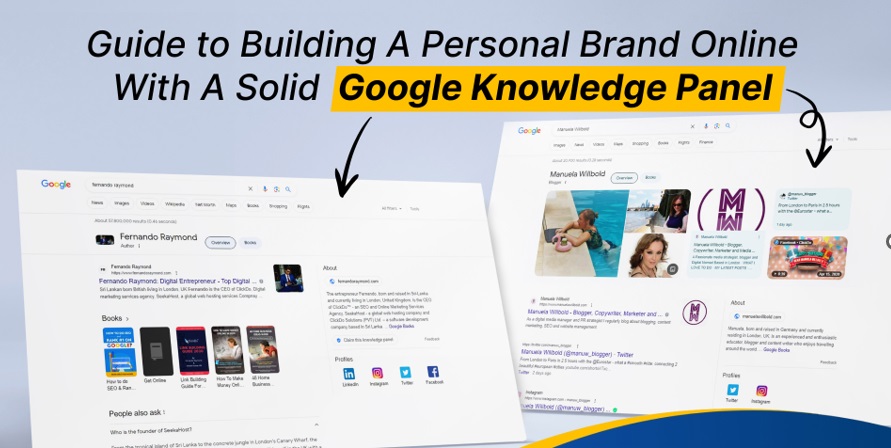
Welcome my digital crew to this thrilling quest to claim your own Google Knowledge Panel. Today, I’m excited to share my passion for crafting a captivating Google Knowledge Panel. It’s all about creating a powerful online presence that leaves a lasting impression on Google’s search results page for whoever searches for yourself or your brand. With the right techniques, we’ll build an incredible online persona, craft engaging content, conquer social media, and optimise for SEO. This journey will help you connect authentically, establish authority, and make a lasting digital impact. Ready to dive in? Let’s rock this transformation! 🚀 3 Tips To Boost Your Website’s Search Engine Ranking – Do you want to know the best #ways to #improve your #SEO ranking? We share 3 #tips to #boost your #website‘s search engine #ranki… https://t.co/QMYDlmmI1r pic.twitter.com/mbx5IBvdNo — Manuela Willbold (@manuw_blogger) March 20, 2023 What is a Google Knowledge Panel? Picture this – you’re searching for a famous or not so famous personality, your favourite brand, or a renowned entity on Google. And there it is, like a hidden treasure waiting to be discovered – the Knowledge Panel, a neat little box on the right side of the search results page revealing everything the search engine links with that search in a compact overview. Why should you care about having one? Well, it’s like holding a golden ticket to the digital kingdom! Having your Knowledge Panel means Google recognizes you as a credible and notable entity. Plus, it boosts your visibility, gives you some control over the info displayed, and improves the user experience for anyone searching for you or your brand. Now, are you eligible to claim your Knowledge Panel? Do you have a strong online presence? And can you verify that you’re the real deal? If yes, you’re on the right path to claiming your Knowledge Panel just as I did! Let’s make it happen! 🌟 How to Get and Claim a Google Knowledge Panel for Yourself or your Brand? Imagine yourself as the star of your show, shining brightly in the online universe. That’s what a Google Knowledge Panel does – it’s your digital spotlight, showcasing your talents and accomplishments to the world. The #1 SEO consultant and digital entrepreneur Fernando Raymond, who is the CEO of digital marketing agency ClickDo, where I work, explains the significance of this panel in more detail in the video below: Yes, it’s a big deal, and those butterflies you get when you see it are normal. But guess what? There are some things to consider to get that sparkling box on the search results page – your Knowledge Panel. Intriguing, right? Let’s make your mark in the digital realm and show the world what you’re made of. I can’t wait to see you shine! Ready, set, let’s go! 1. Step 1: Time to Google Yourself! Alright, my awesome friends, let’s kickstart this adventure with a classic move we all know and love – an excellent old Google search! Get ready to type in your name, brand, or anything that represents your fabulous self in that search bar. Oh, and don’t forget to press that “Enter” key! Keep your eyes peeled for something special – the Google Knowledge Panel. It’s like a shining beacon of information waiting for you on the right-hand side of the search results. So cool, right? – If you can’t see it yet, it means that Google is not able to gather sufficient information about you or your brand yet to display in the panel. For this scenario, I help with content and SEO marketing as an online media strategist to spread more targeted and relevant information online about a person or brand. You can learn more about how we do this at ClickDo in this video and you can contact me to discuss possible solutions to get started with building your Google Knowledge Panel with the right internet references: 2. Step 2: The Magic Words – “Claim this Knowledge Panel” And there it is – the moment we’ve all been waiting for! Spotting those three magical words next to your name or brand appearing on Google – “Claim this Knowledge Panel” – is like finding treasure on a digital map! Now, don’t hold back! Give that mouse click all your energy and purposefully tap on it. That’s the secret code to unlocking the doors of Google Knowledge Panel awesomeness! 3. Step 3: The Verification Adventure Now, let’s prepare for some adventure – the verification process! It’s like a quest to prove that you’re the official representative of the fantastic entity showcased in that Knowledge Panel. Google might have a few tricks up its sleeve, but fear not my fellow adventurers – we’ll follow their instructions closely and breeze through this challenge. You might be asked to share official documents or other nifty forms of evidence to confirm your identity and connection to the entity. It’s all part of the journey to keep things secure and trustworthy. You can simply submit your ID and selfie via the Google form you’re directed to and wait for Google to confirm or to ask you to provide further information. Whatever is required, try to provide the documents requested or else you won’t be able to claim the knowledge panel. 4. Step 4: You Did It – Celebrate Your Success! Congratulations, you superstar! Once you receive that long awaited confirmation email from Google saying “You’ve successfully claimed your Knowledge Panel”, you’ve done it, and it’s time to celebrate your digital victory! Picture your panel like a dazzling digital billboard, where your achievements and credibility shine brightly for the world to see. Now, let’s keep that glow going! Remember, the key to a stunning Knowledge Panel is to keep it fresh and updated regularly. Whenever you achieve something great, add it in by sharing it online via channels that are indexed on Google like websites, social media etc.! Keep your bio and brand story current, showcasing your fantastic journey – this is easily

seo-press-releases--vs-traditional-press-releases
digital marketing, digital PR

SEO Press Releases aka Media Releases vs. Traditional Press Releases – What’s the Best PR Format?

A press release in the traditional sense is a document that a company or organization sends to the media to share news about a new product, event, or significant achievement. Its purpose is to get media coverage and inform the public and journalists about the news. They’re usually sent to journalists, editors, media platforms, and bloggers who write about related topics. They may be distributed through various channels, including email, or social media. A press release that is effectively written is a useful tool for public relations and marketing. But in the digital times we find ourselves in, one must question whether an SEO press release aka media release is more suitable and effective for an audience using digital devices to find and read them. So, let’s understand how it all works. How Search (and SEO) Works Search engines are software programs that help users find information on the web. They use complex algorithms to crawl, index, and rank web pages based on their relevance and quality for a given query. SEO is the process of optimizing website content for improving the performance of the website on search engines. On-page SEO involves making improvements to parts of the website and optimizing posts by adding useful and targeted keywords, titles, headings, links, images, and meta tags. This helps search engines understand and present the content better. The search engine does not have the innate intelligence to understand the content. It depends on backlinks from other sites to inform it how good (or bad) a site is. The process also involves creating valuable and engaging content for the users, as well as building authority and trust on the web through various channels such as social media and other platforms. You can learn more about SEO copywriting in this guide I wrote:   Overall, SEO aims to increase the quantity and quality of organic traffic to the website, which can benefit the website’s goals and conversions. But it is directly interlinked with PR as it can assist with building a solid reputation on the web. Why Traditional Press Releases Are Being Ignored (by Search Engines + Readers) As explained above, SEO is the process of optimizing website content for improving the visibility of the website on search engines. However, some “experts” exploit SEO by using manipulative techniques to boost their ranking or traffic. For example, they may use keyword and backlink stuffing, or duplicate content to trick the search engines and achieve higher ranks and domain authority quicker. Google and Bing dislike these practices because they harm the quality and relevance of the search results. Search engines use algorithms and manual actions to detect and penalize websites that engage in SEO exploitation. A search engine’s mission is to offer users the most accurate and helpful search results pages (SERPs) by linking to the best and most helpful and unique content. I have adopted this mission on the websites I manage where we offer content marketing and PR services, here’s an example of how we follow this through:   Most traditional press releases go out to several publication sites or distribution channels, e.g., Newswire Presswire PR Newswire Google might not index duplicate content as it deems it repetitive and unhelpful. The algorithm detects that the content is the same or similar across several sites. Net result – Google sends the Press Release to page 302 of the search or does not show it at all. What Google does not approve, it buries under a few thousand pages. There is more. Sites that publish press releases use what is known as the no-follow attribute. The no-follow attribute is an HTML attribute used to instruct search engines not to follow or crawl a particular link on a webpage or post. It is commonly used to prevent search engines from associating a website with the content of a linked site. Hence, no link juice. Nothing that sends your Domain Authority on an upward trajectory. To add insult to injury, after a few months when you revisit the press release website, you find your post has been most likely removed. Learn more about link building and why it is vital for SEO and PR in this guide And check out my guides about outreach for link building and link analysis tools so you can improve and monitor your content marketing campaigns effectively. Media Release aka SEO Press Release – the Better PR Alternative A media release also known as an SEO press release is a new and improved iteration of a traditional press release. For Google, as well as for readers, a media release is published in a similar way as any other business news story (and it is only distinguishable through its press release writing format). Here’s an example from the London Business News Magazine. Below are genuinely insightful business news posts revealing unique information or data, which serve as great marketing exposure for businesses and organizations at the same time. Source The traditional press release was made for the non-digital world. News was accessed through the morning paper. There is as much difference between then and now as a Volkswagen Beetle and a brand-new Tesla. Here’s another example of media releases done right: An SEO press release is a media publication format that creates high-quality and optimized content for the web that contains relevant keywords, engaging media such as images and videos and relevant hyperlinks. They are carefully crafted and include: a punchy headline a brief summary of the news quotes from executives or stakeholders with images or social posts background information about the company or organization related hyperlinks for further reading additional media that readers can engage with like videos, social posts, or graphics. contact information for media inquiries. This is not all. They may also feature infographics, pie charts, and graphs to convey an idea quickly yet effectively. SEO press releases are unique because they: Include relevant and targeted keywords. Contain keywords, links, and multimedia content. Contain useful content that is visible on

digitale-marketingstrategien-fuer-marken
All posts, digital marketing, digital PR

6 bewährte digitale Marketingstrategien zur Steigerung der Markensichtbarkeit

Einer der wesentlichen Aspekte jeder digitalen Marketingstrategie ist die Markensichtbarkeit. Je mehr Ihre Marke oder Ihr Unternehmen bekannt ist; desto höher werden die Umsätze sein. Egal, ob Sie ein Start-up-Unternehmer sind oder ein etabliertes Unternehmen haben, Markensichtbarkeit und -bekanntheit spielen eine entscheidende Rolle für den langfristigen Erfolg. Das Ziel, eine gesunde und positive Online-Präsenz für Ihre Marke zu haben, muss in Ihrer maßgeschneiderten digitalen Marketingstrategie unverzichtbar sein und die Marketingexperten von ClickDo liefern hier Tipps und Unterstützung. Lesen Sie weiter, um die wichtigsten digitalen Marketingtrends zu erfahren, die Ihnen helfen können, Ihre Markensichtbarkeit zu erhöhen. 1. Etablieren Sie die Website Ihrer Marke Eine Website ist entscheidend für die Markensichtbarkeit, nicht nur für das Google-Ranking, sondern auch für die Markenwahrnehmung. Eine Website hilft potenziellen Kunden, die Persönlichkeit Ihrer Marke zu assimilieren und mit größerer Wahrscheinlichkeit bei Ihnen zu kaufen. Darüber hinaus ist das Design Ihrer Website für das digitale Marketing für Unternehmen von grundlegender Bedeutung, da es die Persönlichkeit Ihrer Marke widerspiegelt. Wählen Sie Farben, Bilder und Elementkombinationen, die zum Image Ihrer Marke passen. Eine gut gestaltete Website für Ihre Marke hilft Ihrem Unternehmen, sich auf dem Markt abzuheben. Hier ist eine effektive Webseitenstrategie oft hilfreich. Wenn Sie eine führende Agentur für digitales Marketing und Webdesign beauftragen, wie ClickDo, um eine attraktive, benutzerfreundliche und konvertierende Website für Ihr Unternehmen zu erstellen, können Sie Ihren Platz in der digitalen Welt behaupten. 2. Fokus auf SEO Die Bedeutung von SEO für die Markensichtbarkeit wird oft unterschätzt, aber eine Marke muss auf der ersten Seite einer Suche im Internet gefunden werden. Indem Sie sich auf die Sichtbarkeit Ihrer Marke in Suchmaschinen konzentrieren, werden sich die Verbraucher eher an Ihre Marke erinnern. Indem Sie SEO in Ihre digitale Marketingstrategie integrieren, können Sie Ihre Website für Verbraucher sichtbar machen. Dies wird Ihren Umsatz und Ihre Rentabilität erhöhen, indem Sie die Klickraten erhöhen. Es ist wichtig, Ihre Website für organische Suchanfragen zu optimieren, um aussagekräftigere und vertrauenswürdigere Ergebnisse zu erzielen. Bei ClickDo verstehen wir, dass SEO und Marketing eng miteinander verbunden sind und bieten deshalb zum Beispiel Content Marketing an, das durch SEO-Analysen mit SEO Tools optimiert wird, um den Linkaufbau so effektiv wie möglich zu gestalten. Wenn Sie planen, sich für digitales Marketing für Unternehmen zu entscheiden, wird dringend empfohlen, eine Agentur für digitales Marketing für Ihre Marke zu konsultieren. 3. Erstellen eines Blogs Wie bei jeder anderen digitalen Marketingstrategie ist ein gut geschriebener Blog der beste Weg, um gezielte Leser anzuziehen. Blogs erhöhen die Sichtbarkeit Ihrer Marke, indem sie relevante und wertvolle Inhalte bereitstellen, die Antworten auf Fragen bieten, nach denen Menschen auf Suchmaschinen suchen. Leser werden eher zu Kunden, wenn die Bloginhalte gut geschrieben und regelmäßig aktualisiert werden. Der Inhalt Ihres Blogs muss für Ihr Publikum wertvoll und ansprechend sein und gleichzeitig die Leser in Kunden verwandeln. Ob Ihr Blog häufig gestellte Fragen zu einer bestimmten Branche beantwortet oder wertvolle Einblicke bietet, Ihr Publikum muss interessiert sein. Darüber hinaus können Ihre Bloginhalte auf Social-Media-Seiten geteilt werden, wodurch die Sichtbarkeit Ihrer Marke gesteigert wird. 4. Steigern Sie Ihr E-Mail-Marketing Die Durchführung einer erfolgreichen Business-E-Mail-Marketingkampagne für Ihre Marke ist ein Muss, wenn Sie an digitalem Marketing für Unternehmen arbeiten. Ihre E-Mail-Kampagne sollte ein einheitliches Design, Schreibstil und Farbschemata aufweisen. Sie können auch ein Bild oder Firmenlogo einfügen, um Ihre Markenbekanntheit zu steigern. Wenn Sie befürchten, dass Ihre Abonnenten Ihre E-Mails ablehnen, versuchen Sie, E-Mail-Marketing Tools zu nutzen, die E-Mail-Analyse Daten bieten, sodass Sie genau überwachen können, wie Ihre Kampagnen ankommen. Beauftragen Sie am besten eine Agentur für digitales Marketing, um Ihre E-Mail-Kampagne effizient zu verwalten. Denn E-Mail-Kampagnen müssen zu einem strategisch guten Zeitpunkt gesendet werden und um Ihre Abonnenten in Ihrer E-Mail-Datenbank zu behalten sowie neue hinzuzufügen, sollten Sie regelmäßig relevante, zielgerichtete E-Mails senden. 5. Verbesserung der Social-Media-Präsenz Das Hauptziel des Social-Media-Marketings ist es, das Community-Engagement zu erhöhen, das Publikum Ihrer Marke aufzubauen und den Web-Traffic zu erhöhen. Der Hauptzweck der Nutzung sozialer Medien wie Facebook für die Markensichtbarkeit besteht darin, das Markenbewusstsein zu steigern. Abhängig von Ihren Zielen gibt es mehrere Möglichkeiten, das Engagement der Community zu messen. Einige Marken verwenden Kommentare, während andere Shares und Conversions überwachen. Unabhängig von der Methode ist es wichtig, sicherzustellen, dass Sie genügend effektive Inhalte teilen, um die Sichtbarkeit Ihrer Marke zu erhöhen. Versuchen Sie Ihre Beiträge so zu gestalten, dass die Zielgruppe mehr mit Ihrer Marke interagieren möchte. Beauftragen Sie eine erfahrene Agentur für digitales Marketing, um die Social-Media-Präsenz Ihrer Marke zu verbessern, wenn es hier Bedarf gibt. 6. Online-Kundenbewertungen fördern Ein zunehmend wichtiger Aspekt der digitalen Marketingstrategie ist die Verbesserung der Sichtbarkeit Ihrer Marke durch Online-Kundenbewertungen. Online-Bewertungen von echten Kunden können Ihrer Marke helfen, zu wachsen und eine positive Sichtbarkeit online zu erlangen. Während Online-Kundenbewertungen mehrere Vorteile haben, müssen Sie wachsam sein, wenn es darum geht, sie zu überwachen. Negative Bewertungen können Ihrer Marke schaden und es Ihnen erschweren, neue Kunden zu gewinnen. Ein Unternehmen, das nicht auf negative Bewertungen reagiert, verliert eine große Chance, einen soliden Ruf aufzubauen. Der beste Weg, um die Sichtbarkeit Ihrer Marke aufrechtzuerhalten, besteht darin, eine engagierte Agentur für digitales Marketing zu beauftragen, Ihre Online-Präsenz aktiv zu verwalten und Kundenbewertungen zu regulieren. Zufriedene und treue Kunden zu ermutigen, Ihre Marke online zu bewerten, muss Teil Ihrer digitalen Marketingstrategie sein, denn die meisten Menschen werden sich erst die Bewertungen anschauen, bevor Sie sich für Ihre Marke entscheiden, sei das nun auf Google Business oder anderen Portalen, wo Sie vertreten sind. Digitales Marketing leistet Vieles für Ihre Marke Es gibt viele Möglichkeiten mit digitalem Marketing die Markensichtbarkeit zu erhöhen, wie die oben genannten Methoden und Strategien zeigen. Wenn Sie Ihre Zeit in die Stärkung Ihrer organischen Reichweite investieren, indem Sie sich auf SEO konzentrieren, einen Blog erstellen und Ihre sozialen Follower aufbauen, können Sie bemerkenswerte Ergebnisse mit besserem Engagement und höherem ROI erzielen. Wenn Sie Unterstützung benötigen, um Ihre Marke für Ihre potenziellen Zielgruppen sichtbarer zu machen, nehmen Sie Kontakt auf oder erfahren Sie mehr über die Marketing Dienste, die wir anbieten.

Scroll to Top